
 Games
Games Game Series
 Guide
Guide
 简体中文
简体中文 हिन्दी
 한국어
한국어 Tiếng Việt
 ไทย
ไทยIf you have spent any significant amount of time exploring Illusion’s massive catalog of adult 3D titles, you will quickly realize that not every game from the legendary studio attempts to achieve the exact same goal. Some of their flagship titles aim for massive, endless customization, others lean heavily into open-world or high school simulation systems, and a select few focus almost entirely on tight, structured interaction. Play Club belongs firmly and proudly in that last category.
Released in 2015 under the native Japanese name プレイクラブ, the game arrived at a highly transitional moment for the development studio. It launched just before Illusion shifted their design philosophy heavily toward the completely open, sandbox-style experiences that would eventually define games like Honey Select and Koikatsu. Because of its specific release window, Play Club feels very much like a historical bridge between two entirely different game design philosophies—offering structured, linear gameplay on one side, and teasing the freedom-driven systems on the other.
At first glance, it may seem like a noticeably smaller title compared to the massive engines that came after it. There is no endless character creator filled with thousands of sliders, nor is there an expansive, free-roaming world to explore. However, the longer you spend with the game, the clearer it becomes that Play Club is not trying to overwhelm you with features. Instead, it deliberately focuses on delivering a tight, highly controlled experience where every single interaction feels intentional and rewarding. And surprisingly, that elegant simplicity is exactly what keeps dedicated players coming back to it all these years later.
If you’re interested in exploring other titles from Illusion’s earlier design eras, Rapelay represents a far more controversial and narrative-driven direction, while Real Play focuses on interactive simulation with a more grounded, system-based approach. For a simpler, more structured experience that reflects the studio’s early 3D design philosophy, Biko 3 is also worth checking out.
Story of Play Club
The narrative structure in Play Club does not unfold in the traditional, cinematic way you might expect from a standard visual novel or a heavy story-driven RPG. Instead of long, drawn-out dialogue sequences or clearly defined, epic plot arcs, the game presents its story entirely through environmental atmosphere, subtle character behavior, and a sense of gradual, psychological progression.
You take on the role of an unnamed male protagonist who has been hired to work in a massive, deeply secluded mansion. The specific details of the job itself are never fully explained in a lengthy exposition dump, but your core responsibilities quickly become apparent as you explore the grounds. You are there to interact with and “train” a specific group of women who reside within this highly isolated environment.
The setting itself plays a monumental role in shaping the overall narrative experience. There is absolutely no connection to the outside world, no sense of a normal daily routine, and no clear avenue of escape. Everything that happens in the game takes place strictly within the luxurious but imposing boundaries of the mansion. This creates a lingering, undeniable feeling of confinement and secrecy that permeates the entire playthrough.

Each character you encounter reacts completely differently when you first meet them. Some of the women are highly defensive, cold, and distant, while others seem deeply confused, hesitant, or uncertain about their current situation in the mansion. As time passes and your sessions continue, their reactions begin to change dynamically depending on exactly how you choose to approach each interaction. These psychological shifts are incredibly subtle at first—perhaps a slight change in tone or body language—but they gradually become much more noticeable. This gives the player the distinct impression that their specific actions are directly shaping the direction and tone of the story.
What makes the narrative of Play Club so interesting is that it never spells everything out for you in plain text. Instead, it leaves massive amounts of room for player interpretation. The intricate relationships, the true nature of the environment, and even the overarching motivations behind the mansion’s entire setup remain partially hidden in the shadows. This allows players to draw their own conclusions about the world. Furthermore, the game features multiple endings that add a significant layer of depth to the experience. Depending on how you interact with each individual character and how you manage your progression through the game’s phases, you will reach entirely different outcomes. This gives the story a fantastic sense of replayability, even without relying on a heavy, text-based narrative structure.
Gameplay of Play Club
Where Play Club truly finds its greatest strength is in its highly focused gameplay loop. It actively refuses to rely on overly complex mechanics, labyrinthine menus, or layered sandbox systems. Instead, it builds its entire interactive experience around direct, one-on-one engagement and a highly satisfying sense of steady progression.
The Structured Session Cycle
From the moment you start a new playthrough, the game places you into a very structured, easy-to-understand cycle of interactive sessions. Each session focuses intensely on a single character of your choosing, giving you the dedicated opportunity to interact with them, observe their physical and emotional reactions, and gradually influence their specific outcomes. The mouse-driven controls are incredibly simple and intuitive enough to pick up within the first few minutes, but the engine still provides more than enough mechanical depth to keep the interactions highly engaging over long periods.
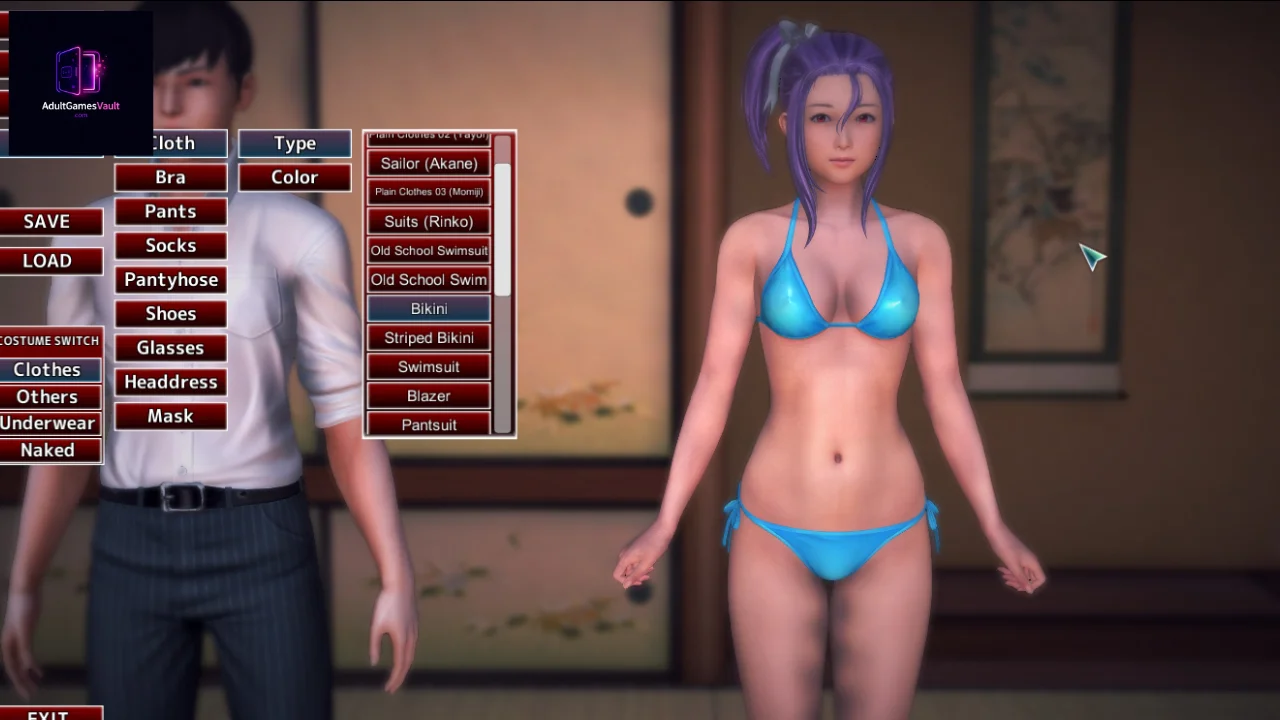
What stands out the most about this system is the deliberate pacing. The game never rushes you to the finish line, but it also respects your time by ensuring there are no massive lulls in gameplay. Every single session feels like a definitive step forward. You are constantly working toward unlocking brand new scenes, discovering new behavioral variations, and achieving new endings, which creates a highly addictive and steady sense of reward. As you continue playing and building these dynamics, more content naturally becomes available to you. This includes advanced interactions, character-specific emotional moments, and subtle dialogue variations that directly reflect your chosen approach. The progression system is straightforward, yet it remains incredibly effective at keeping you engaged without ever overwhelming you with unnecessary mechanical complexity.
Transitioning to Free Mode
Eventually, once you have successfully navigated the structured narrative and completed the core progression arcs, the game brilliantly opens up into a much more flexible mode where you can revisit content freely. At this specific point, Play Club begins to shed its linear skin and starts to feel less like a strictly guided experience and much more like a controlled 3D sandbox.
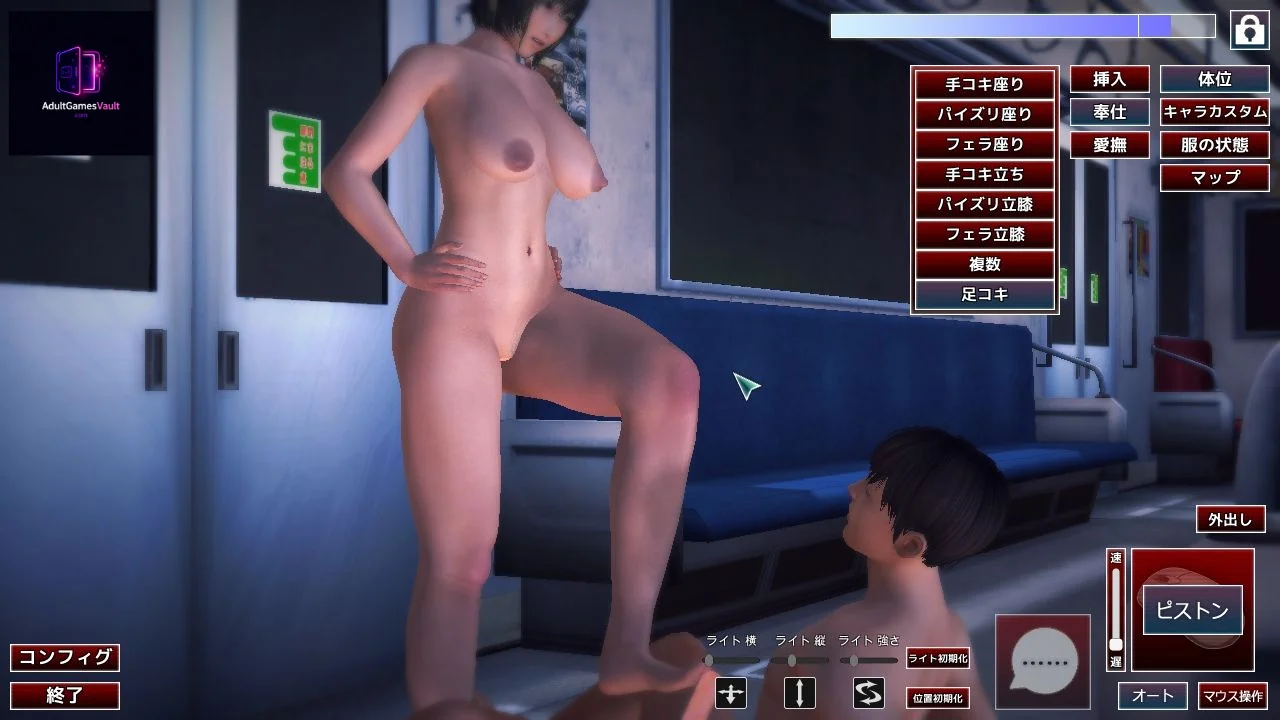
You gain complete freedom to experiment with the engine, adjust the characters’ scenarios, and explore entirely different visual possibilities without being tied down by the pressure of the progression meters. This transition is easily one of the game’s absolute strongest design aspects. It allows players to first experience a carefully curated, guided system to learn the ropes, and then seamlessly move into a much more open-ended, creative environment once they are fully comfortable with the game’s mechanics.
Community Feedback for Play Club
Over the years, Play Club has quietly built a highly dedicated, passionate fanbase that continues to appreciate its streamlined design philosophy. When looking at community discussions and retro gaming forums, the consensus is remarkably consistent regarding what the game does right and where it falls short compared to modern titles.
What Players Love
Many players consistently highlight the game’s undeniable simplicity as its absolute strongest feature. In an era where modern 18+ games require you to spend three hours adjusting cheekbone sliders before you even see the actual gameplay, the immediacy of Play Club is incredibly refreshing. The core gameplay loop is incredibly easy to understand, and the structured progression system keeps things highly engaging without ever becoming a logistical chore.
There is also a very strong sense of player control in the way the interactions are handled mechanically. Players frequently describe the 3D experience as highly direct, tactile, and immediately satisfying, especially when compared to the more complex, menu-heavy titles that require a massive amount of setup just to trigger a single scene. Furthermore, the community’s reliance on modding—specifically the introduction of comprehensive English translations, visual enhancement patches, and massive custom outfit packs—has kept the game visually appealing and mechanically accessible for Western audiences for nearly a decade.

Constructive Criticism
On the other hand, a common point of constructive criticism from the community is that the game fundamentally lacks systemic depth in the long run. When compared to the sprawling, infinite nature of later Illusion titles like Koikatsu or AI Shoujo, the content well in Play Club has a definitive bottom. Once all the narrative content is fully unlocked and every ending has been seen, the vanilla experience can start to feel quite repetitive.
This is exactly where the modding community plays such an incredibly vital role. Without the massive injection of variety provided by community-made plugins and custom character assets, the game’s natural lifespan is noticeably shorter than its sandbox successors. It is a game that deliberately prioritizes immediate accessibility and polish over long-term, endless complexity.
Play Club System Requirements
Even though Play Club was originally released back in 2015, it was built during Illusion’s early transition into more complex 3D rendering engines. As a result, it still requires a fairly capable PC to run at peak performance, especially if you plan to heavily modify the game with high-resolution textures and community patches.
| COMPONENT | MINIMUM REQUIREMENTS | RECOMMENDED REQUIREMENTS |
| Operating System | Windows 7 / 8.1 / 10 (32-bit or 64-bit) | Windows 10 / 11 (64-bit highly recommended) |
| Processor | Intel Core i3 or equivalent AMD | Intel Core i5 / AMD Ryzen 5 or better |
| Memory (RAM) | 4 GB RAM | 8 GB RAM (Crucial for heavily modded setups) |
| Graphics | DirectX 11 compatible GPU (1 GB VRAM) | NVIDIA GeForce GTX 750 Ti / AMD equivalent or better |
| DirectX | Version 11 | Version 11 |
| Storage | 10 GB available space | 20+ GB available space (SSD strongly recommended for mods) |
Optimization Note: On modern gaming hardware, the base vanilla game will run incredibly smoothly without any major technical hiccups. However, older office laptops or aging systems may struggle with frame drops, particularly when massive amounts of uncompressed community clothing mods are installed. Storage speed is also a highly important factor; installing the game and its associated mod packs on a Solid State Drive (SSD) will drastically cut down on menu loading times.
Conclusion
Play Club may not be the most technologically advanced, systemically complex, or wildly feature-rich game that Illusion has ever created, but the reality is that it simply doesn’t need to be. Its ultimate strength lies entirely in its clarity of vision and its unwavering mechanical focus. It delivers a highly straightforward, engaging gameplay loop, executes that loop exceptionally well, and leaves a lasting, memorable impression precisely because of that restraint.
In a modern gaming era where so many titles desperately try to offer every single feature at once—often resulting in bloated, unfocused experiences—Play Club stands out by doing less, but doing it significantly better. It is incredibly easy to pick up, highly satisfying to play, and remains wonderfully relevant years after its initial release thanks to the passion of its modding community. If you are looking for an endless, deep sandbox experience, there are certainly newer titles in Illusion’s catalog that will suit you better. But if you want something much more direct, highly controlled, and incredibly easy to jump right into, Play Club is still an undisputed classic that is absolutely worth your time.