
 Games
Games Game Series
 Guide
Guide
 简体中文
简体中文 हिन्दी
 한국어
한국어 Tiếng Việt
 ไทย
ไทย@Home Mate (officially released in Japan and heavily stylized as @ふぉーむメイト / At Home Mate) is a highly charming, deeply nostalgic 18+ 3D life simulation and visual novel developed by the legendary Japanese adult gaming studio, Illusion. Released in May 2009, this title represents a fascinating era in Illusion’s massive development catalog. While the studio is incredibly famous for its chaotic, highly systemic high school sandboxes or dark, narrative-heavy action games, @Home Mate takes an entirely different, much softer approach to the 3D adult genre.
Instead of placing you in a massive school or an isolated island, the game strips away the sprawling environments to focus entirely on a cozy, intimate, and relaxing domestic setting. It is a slow-burn slice-of-life simulator that perfectly captures the feeling of a relaxing summer vacation in the countryside. By blending traditional visual novel storytelling with real-time 3D character interactions and Illusion’s signature character customization tools, it delivers an incredibly wholesome yet mechanically engaging 18+ experience.
Because this title was released exclusively in Japan over a decade ago, it was never officially localized for Western digital storefronts. However, thanks to a deeply dedicated retro gaming community, the game remains highly accessible today through digital archives and community-made English translation patches.
If you enjoy the cozy, slice-of-life atmosphere and intimate character interactions in @Home Mate, then Musumakeup is a great follow-up—offering a similarly personal, single-character experience with a stronger focus on emotional development and raising-simulation mechanics within Illusion’s classic 3D style. And if you want something a bit more modern with deeper customization and a wider range of interactions, Koikatsu series is another excellent choice, expanding the formula into a more flexible sandbox while still keeping that same anime-style charm.
Story of @Home Mate
If you are expecting high-stakes drama, complex plot twists, or world-ending fantasy scenarios, you will not find them here. The narrative of @Home Mate is beautifully grounded, relying entirely on the heartwarming, classic anime tropes of childhood friends and quiet domestic life.
You step into the shoes of the protagonist, a young man living a peaceful, albeit slightly lonely, life in a spacious, traditional Japanese house located deep in the tranquil countryside. Your quiet daily routine is suddenly—and wonderfully—interrupted when you receive a visit from three sisters who happen to be your closest childhood friends: the Yunagi sisters. They have come to stay at your home, immediately filling the empty house with energy, laughter, and inevitable romantic tension.
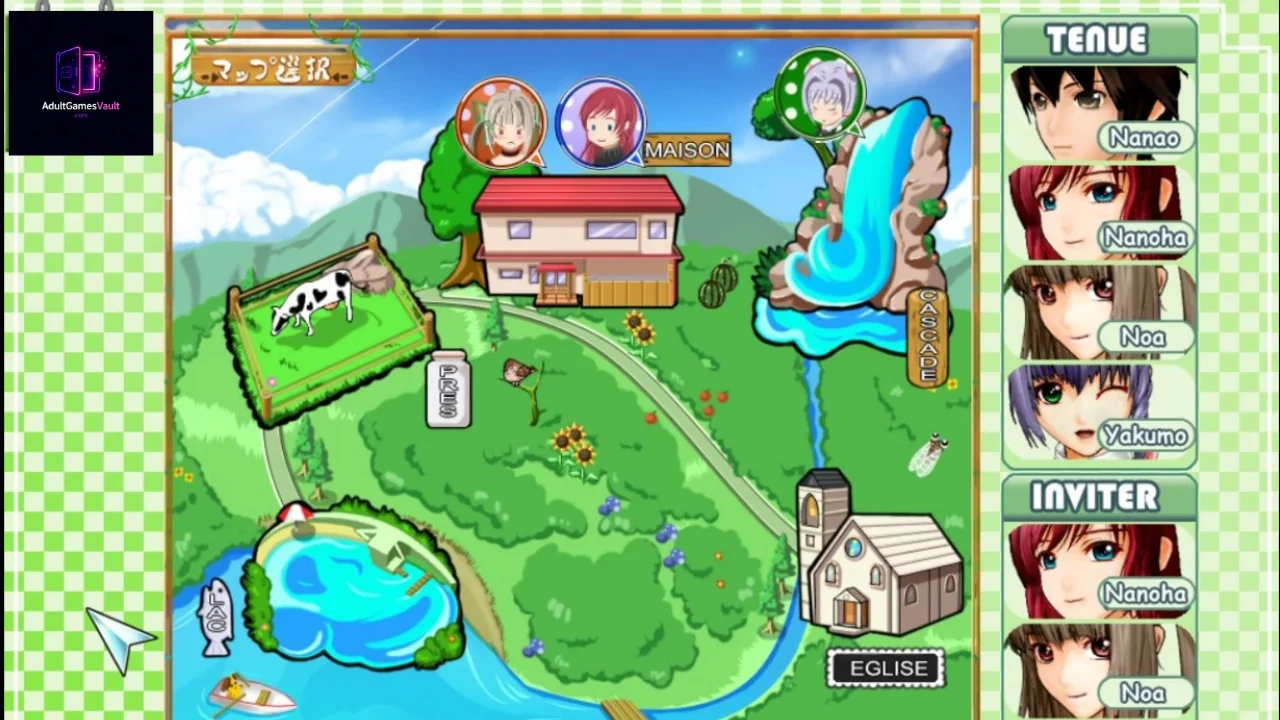
Because the game’s scope is so tightly focused on just these three official heroines, Illusion poured a massive amount of writing and character development into ensuring they feel distinct, lovable, and emotionally grounded.
- Yakumo Yunagi: The eldest sister, acting as the mature, responsible, and highly dependable mother figure of the group.
- Noa Yunagi: The middle sister, an aspiring violinist with a classic “tsundere” personality. She is highly prideful and fiercely defensive, often hiding her delicate emotions behind a wall of complaints. She is also notoriously disastrous in the kitchen, often burning your meals to a crisp.
- Nanoha Yunagi: The youngest sister, a quiet, serious, and deeply artistic girl who can spend the entire day lost in her drawings. While she is somewhat slow to react to her surroundings, she is incredibly sweet and deeply attached to the protagonist, affectionately referring to him as “Nii-sama.”
The overarching plot of the game does not force you to solve a grand mystery. Instead, the narrative unfolds organically through your daily domestic interactions. As the days pass, you share meals, talk in the living room, and slowly break down the emotional walls between you and the sisters. The story transitions beautifully from the comfortable nostalgia of childhood friendship into genuine, heartfelt romance, offering multiple branching endings depending on which sister you choose to dedicate your time to.
Gameplay of @Home Mate
The gameplay loop of @Home Mate is a brilliant hybrid of time-management simulation, point-and-click interaction, and highly detailed 3D sandbox mechanics. It encourages a slow, methodical approach, rewarding players who take the time to simply observe and engage with the digital environment.
Domestic Life and Daily Simulation
The core of the game revolves around managing your daily schedule inside the countryside house. The game operates on a day-and-night cycle, where you must physically navigate the 3D environments—such as the kitchen, the living room, the bedrooms, and the garden—to locate the Yunagi sisters.
The simulation is surprisingly detailed for a 2009 release. The sisters do not simply stand in one place waiting for you; they follow their own AI routines. You might find Noa practicing her violin in the afternoon, or Nanoha quietly sketching on the porch. Your goal is to approach them and initiate interactions. Through a menu-driven dialogue system, you can chat with them, offer them gifts, or help them with household chores. Every successful interaction slowly fills their hidden affection meters. However, if you interrupt them while they are busy or choose the wrong dialogue options, they will become annoyed, requiring you to rebuild their trust. It is a relaxing, highly immersive loop that genuinely makes the house feel alive.
The Character Maker and Customization
It would not be an Illusion game without an incredibly robust Character Maker. While the game heavily promotes the three Yunagi sisters as the main narrative focus, you are by no means restricted to their default appearances.
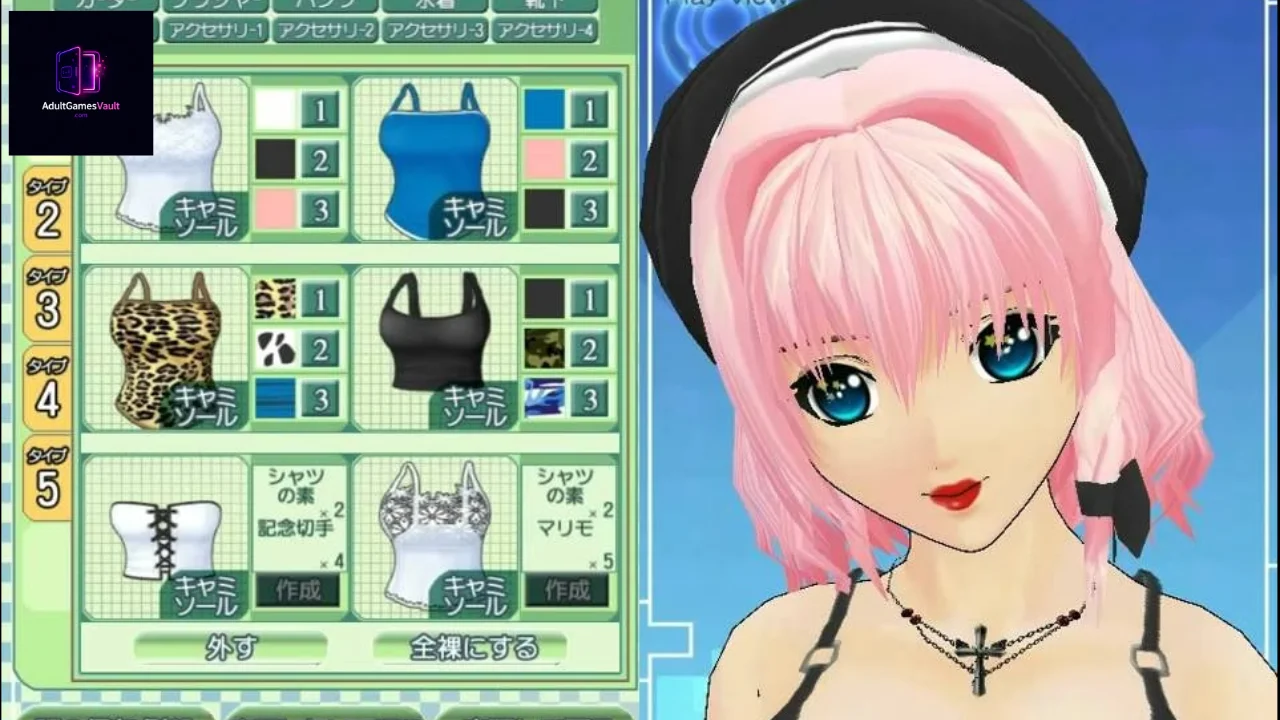
The game allows you to take the heroines into the customization suite to alter their physical attributes, hairstyles, and, most importantly, their wardrobes. You can dress the sisters in a massive variety of outfits tailored for different times of the day—ranging from casual loungewear and summer dresses to sleepwear and traditional yukatas. The customization system ensures that even though you are playing a structured narrative, the visual presentation of the characters remains entirely under your creative control.
Interactive 18+ Mechanics and Poser Mode
As you successfully navigate the daily domestic simulation and maximize a sister’s affection meter, the game transitions from a wholesome slice-of-life story into its core 18+ mechanics.
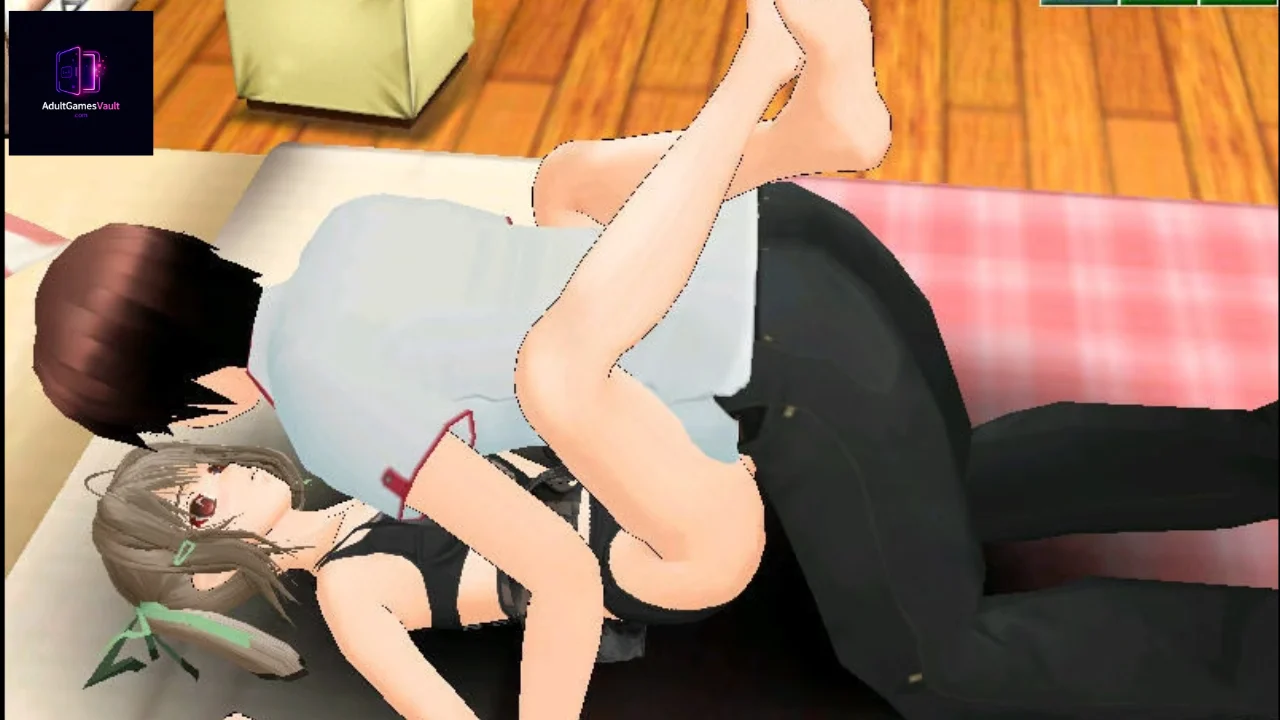
Once a romance is officially established, you can invite the heroines into private spaces. Illusion’s real-time 3D engine truly shines in these sequences. Rather than reading static text, you use your mouse to directly interact with the 3D models. The engine features impressive real-time physics and dynamic camera controls, allowing you to set the pace of the intimacy. Furthermore, the girls’ reactions are fully voiced by professional Japanese voice actresses, and their responses change dynamically depending on their specific personality traits (for example, Noa will act much more embarrassed and hesitant compared to the mature Yakumo).
Additionally, @Home Mate includes a highly praised “Motion Viewer” or “Poser Mode.” This is a dedicated sandbox feature completely separate from the main story. Here, you can load up the character models, place them on beds or tables, assign specific animations, and manipulate the camera to take high-resolution screenshots. It is a fantastic tool for players who simply want to use the game as a 3D digital art studio.
Community Feedback for @Home Mate
Within the retro 3D gaming community, @Home Mate holds a very special, nostalgic place. While it may not have the massive, chaotic popularity of Illusion’s school-based simulators, it is universally respected for what it managed to achieve conceptually.
What Players Love
The most consistent praise directed at the game is its impeccable atmosphere. Players absolutely love the quiet, relaxing, and cozy vibe of the countryside setting. In an adult gaming market saturated with extreme fetishes, dark themes, or overly complex resource management, the simple joy of sharing a virtual summer vacation with three beautifully designed characters is incredibly refreshing.
The community also frequently praises the visual quality. For a game released in 2009, the 3D character models hold up remarkably well. The textures are soft, the facial expressions are highly emotive, and the sheer volume of customizable clothing options gives the game excellent visual variety.
Constructive Criticism
On the critical side, modern players often point out that the game’s user interface and camera controls have aged somewhat poorly. The mouse-driven camera navigation around the house can feel incredibly clunky and unresponsive, often resulting in players getting stuck on furniture or struggling to focus on a character.
Furthermore, the gameplay loop is intentionally very slow. Players who prefer fast-paced progression or immediate access to the 18+ adult scenes often find the daily requirement of talking, observing, and building affection to be a bit of a grind. It is a game that demands patience, which may not appeal to every demographic.
The Modding Scene and Localization
Because Illusion games are highly modular, @Home Mate boasts a surprisingly robust modding scene. The game’s assets are packed into standard .pp and .lst files, which the community quickly cracked.
For Western players, the community is the absolute lifeblood of this game. To play the game in English today, players rely heavily on community-made translation patches and the legendary “HF Patch” ecosystem. These patches translate the menus and dialogue, remove the Japanese mosaic censorship, and inject hundreds of custom, fan-made outfits into the Character Maker, drastically extending the lifespan and accessibility of the title.
@Home Mate System Requirements
Because @Home Mate was built on Illusion’s older DirectX 9 engine over a decade ago, it is incredibly lightweight by today’s standards. Virtually any modern laptop, office PC, or gaming rig can run this game at a flawless framerate without breaking a sweat.
| COMPONENT | MINIMUM REQUIREMENTS | RECOMMENDED REQUIREMENTS |
| Operating System | Windows XP / Vista / 7 | Windows 10 / 11 (Requires Japanese Locale or HF Patch) |
| Processor | Intel Pentium 4 2.0 GHz | Intel Core 2 Duo / Core i3 or equivalent |
| Memory (RAM) | 1 GB RAM | 2 GB RAM (4 GB recommended for modded gameplay) |
| Graphics | DirectX 9.0c Compatible GPU (128 MB VRAM) | Any modern dedicated or integrated GPU |
| DirectX | Version 9.0c | Version 9.0c |
| Storage | 6 GB available space | 10 GB available space (To accommodate community mods) |
Important Optimization Note: If you are attempting to play the original, unmodded Japanese release on a modern Windows 10 or 11 system, the game will likely crash on startup due to locale issues. You must run the executable using a third-party Japanese locale emulator (such as Locale Emulator) to bypass this error. Alternatively, installing a modern community repack or translation patch usually fixes these modern OS compatibility issues automatically.
Conclusion
@Home Mate is a beautifully crafted, highly nostalgic time capsule that proves 3D adult games do not always need to rely on massive, chaotic sandboxes to be successful. By focusing its engine entirely on a quiet, intimate countryside setting and a small, lovable cast of characters, Illusion managed to create a genuinely heartwarming slice-of-life simulator.
While its camera controls are undeniably clunky by today’s standards and the pacing requires a fair amount of patience, the emotional payoff and the cozy atmosphere make it entirely worth the effort. Whether you are a fan of classic visual novels, enjoy robust character customization, or simply want a relaxing virtual getaway with three charming heroines, @Home Mate is an absolute retro classic that still deserves your attention today.