
 Games
Games Game Series
 Guide
Guide
 简体中文
简体中文 हिन्दी
 한국어
한국어 Tiếng Việt
 ไทย
ไทยHako (officially stylized natively in Japan as Box -Hako- or 箱 -はこ-) is undoubtedly one of the most conceptually bizarre, highly experimental, and uniquely charming 18+ 3D simulation games ever produced by the legendary studio Illusion. Released in October 2008, this title arrived during a phase where the developers were actively throwing unconventional ideas at the wall to see what would stick. Rather than relying on the sprawling tropical resorts of Sexy Beach or the complex, multi-character school ecosystems of Artificial Academy, Hako scales everything down—quite literally.
This game is not a traditional visual novel or an open-ended dating simulator. Instead, it operates heavily on the mechanics of a virtual pet simulator, drawing heavy mechanical inspiration from titles like Tamagotchi or Seaman, but injecting it with Illusion’s signature high-quality 3D interactive adult elements. You are essentially given a magical dollhouse and tasked with raising, observing, and intimately interacting with a fairy-sized anime girl who lives on your desktop.
Because of its highly specific premise—which leans heavily into the fantasy aesthetics of shrinking, giant interactions, and voyeuristic observation—Hako cultivated a very dedicated, highly niche cult following. It was never officially localized for Western digital storefronts, meaning playing this surreal 2008 desktop experiment today relies entirely on historical digital archives and the tireless efforts of the fan translation community.
If you’re interested in exploring other niche, experimental titles with a strong focus on character interaction, Wakeari is worth checking out—offering a similarly unconventional, story-driven experience with its own unique atmosphere. And for a more grounded, cozy slice-of-life alternative, @Home Mate provides a relaxing domestic setting with deeper day-to-day interactions and a warmer, more nostalgic tone.
Story of Hako
If you boot up Hako expecting a grand, sweeping narrative filled with emotional character arcs, dramatic plot twists, or a looming antagonist, you will need to completely adjust your expectations. Much like the game’s physical environment, the narrative scope is intentionally restricted, completely contained, and highly surreal.
The story functions entirely as a lighthearted, bizarre framing device to justify the existence of the desktop sandbox. The premise is delightfully absurd: You play from a first-person perspective, sitting at an ordinary desk. Sitting right in front of you is a mysterious, intricately designed wooden box. The game begins when you are prompted to place a magical apple inside this box. Through an unexplained supernatural transformation, the piece of fruit suddenly morphs into a tiny, beautifully rendered, fairy-sized anime girl who now claims the inside of the box as her permanent home.
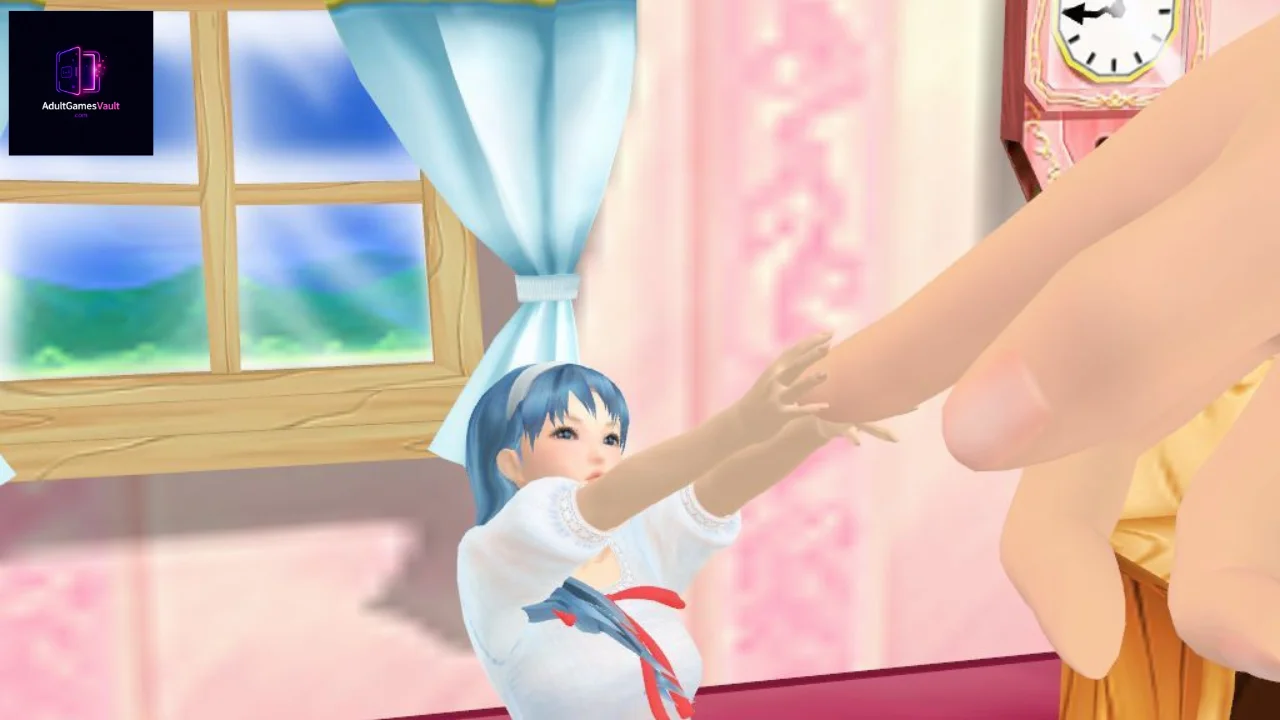
Because the game is designed to be highly replayable, the magical box can manifest five completely distinct heroines, each possessing their own unique personality archetype, high-quality Japanese voice acting, and specific dietary preferences:
- Fujiko-chan: A sweet and energetic girl whose absolute favorite food is strawberries.
- Mu-chan: A slightly more relaxed and cheerful heroine who prefers eating oranges and bananas.
- Beniwo-san: A unique, slightly quirky girl whose preferred diet consists of carrots and tomatoes.
- Kogane-san: A quiet and reserved character who enjoys cabbage and beans.
- Rin-chan: A sophisticated, elegant girl who strongly prefers white grapes and mushrooms.
There is no world-saving quest or dramatic conclusion to work toward. The entire “plot” of the game consists of the slow, voyeuristic, and highly domestic process of taking care of your tiny companion. You watch her sleep, observe her daily routines, feed her the correct fruits, and slowly build a bizarre but deeply intimate bond over time. The narrative depth is derived entirely from the relaxing, slice-of-life moments you share together within the four walls of the magical wooden box.
Gameplay of Hako
The gameplay loop of Hako is deeply unconventional, cleanly splitting its mechanics between a God-game observation tool and a highly interactive, rhythm-based 18+ simulator. It demands a completely different approach compared to Illusion’s standard point-and-click titles.
The Virtual Dollhouse Mechanics
When the game begins, you are placed in the “Observation Phase.” Operating from a third-person perspective outside the box, you act as an overarching, giant caretaker. The user interface allows you to freely rotate the camera around the diorama-like room, peering through the open ceiling to watch your heroine go about her miniature life.
Your primary form of interaction is utilizing a set of massive, normal-sized human hands that float above the box. Using your mouse, you can reach down into her environment. The interactions here are heavily inspired by virtual pet mechanics. You can gently poke her to get her attention, tickle her to raise her mood, or physically pick her up.
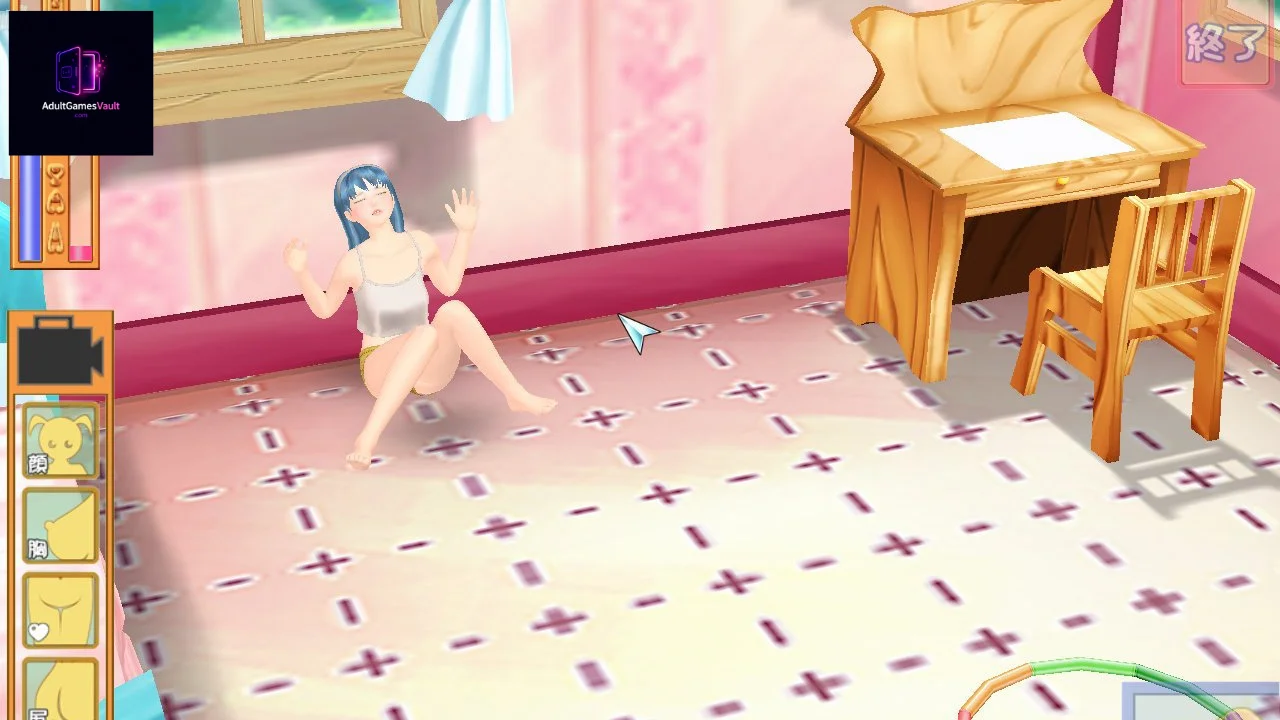
A major aspect of the daytime gameplay is resource management and customization. You must regularly feed her by dropping massive pieces of fruit into the box. Feeding a girl her preferred food drastically raises her affection and mood meters, while feeding her something she dislikes will make her act stubbornly. As days pass and your relationship improves, you unlock the ability to customize the interior of the box itself. You can swap out the dollhouse furniture, change the wallpaper, and unlock dozens of different outfits to dress her in, turning the game into a surprisingly robust miniature interior design simulator.
Size Difference and 18+ Interaction
As you successfully manage your tiny companion’s mood and maximize her affection meter, the game unlocks its core 18+ mechanics, which are handled in two incredibly distinct ways that directly cater to the game’s fantasy premise.
First, you can choose to interact with her while maintaining your massive, normal-sized physical form. This involves using your giant hands to directly engage with the fairy-sized heroine, an interactive mechanic that heavily popularized the game within specific niche communities.

Alternatively, the protagonist possesses the magical ability to shrink himself down to her exact size and physically enter the box. Once inside, the gameplay shifts into a much more traditional Illusion 3D dating sim perspective. The mechanics here are highly structured. You select various physical positions from a menu, and use your mouse scroll wheel to control the rhythm and speed of the action.
UI and Progression Systems
The 18+ sequences rely on a series of visual UI meters that the player must carefully manage. The most prominent is the Heart Meter; as you find the correct rhythm using the scroll wheel, a red heart fills up, indicating the heroine’s pleasure. Successfully filling the heart by 90% causes the animation to change and become more passionate. Simultaneously, the game tracks a “Dress Meter,” which slowly depletes as the encounter continues, organically removing the heroine’s clothing in stages. It is a highly systemic, gamified approach to adult content that requires actual mechanical focus rather than simply watching a pre-rendered video play out.
Community Feedback for Hako
Because Hako is such a massive departure from the studio’s usual formula, community feedback over the years has been fascinatingly divided. It is a game that players tend to either completely adore for its bizarre charm or drop after an hour due to its limited scope.
What Players Love
The most consistent praise directed at the game is its sheer, unadulterated originality. The concept of blending an adult dating simulator with a virtual Tamagotchi pet is incredibly unique. Players absolutely love the cozy, relaxing atmosphere of the dollhouse setting. There is something deeply satisfying about dropping a massive strawberry into a tiny room and watching the AI character happily react to it.
Furthermore, the game caters perfectly to fans of the “size difference” or microphilia aesthetic without ever crossing into dark or non-consensual territory. It manages to take a highly specific, surreal fantasy and execute it with an incredibly wholesome, lighthearted tone, which is a rare feat in the adult gaming industry.

Constructive Criticism
On the critical side, the primary complaint from the community is that the game ultimately lacks long-term depth. Because the entire game takes place inside a single box, the environmental variety is basically non-existent. The Tamagotchi loop of feeding, poking, and customizing the room can become incredibly repetitive after you have unlocked the main furniture pieces.
Additionally, veteran Illusion fans often point out that once you shrink down into the box, the 18+ mechanics feel a bit barebones compared to the massive, sprawling sandboxes of Sexy Beach 3 or Artificial Girl 3. It is a game built entirely around a single, highly specific gimmick, and once the novelty of that gimmick wears off, there is not much mechanical substance left to keep hardcore gamers engaged for hundreds of hours.
The Essential HF Patch
Like almost all legacy titles developed by Illusion, playing Hako today is heavily reliant on the preservation efforts of the modding community. The original 2008 release was entirely in Japanese, which made navigating the food menus, understanding the girls’ dialogue, and unlocking new furniture highly frustrating for Western players.
The community-developed English Translation Patches (often bundled with the HF Patch ecosystem) are considered absolutely mandatory. These patches fully translate the UI, item descriptions, and dialogue, while simultaneously removing the original Japanese mosaic censorship. Furthermore, modern repacks implement registry fixes that allow the aging 2008 engine to run smoothly on modern Windows 10 and Windows 11 operating systems, ensuring the game does not simply crash to the desktop upon launching.
Hako System Requirements
Because Hako was developed over fifteen years ago on an early Illusion 3D engine, its hardware requirements are phenomenally low by today’s standards. Any functioning modern computer, including low-end office laptops and basic Windows tablets, can run this virtual pet simulator flawlessly at maximum settings.
| COMPONENT | MINIMUM REQUIREMENTS | RECOMMENDED REQUIREMENTS |
| Operating System | Windows 2000 / XP / Vista | Windows 10 / 11 (Requires English Patch or Japanese Locale) |
| Processor | Intel Pentium 4 1.5 GHz | Intel Pentium 4 2.4 GHz or any modern CPU |
| Memory (RAM) | 512 MB RAM | 1 GB RAM (2 GB recommended for modern OS) |
| Graphics | DirectX 9.0c Compatible GPU (64 MB VRAM) | Any modern dedicated or integrated GPU |
| DirectX | Version 9.0c | Version 9.0c |
| Storage | 3 GB available space | 5 GB available space (To accommodate translation mods) |
Optimization Note: While your hardware will absolutely not struggle to run this game, software compatibility is the main hurdle. If you attempt to install and run the original, unmodded Japanese executable on a modern Windows 10 or 11 system, it will likely fail to boot due to locale registry conflicts. You must either run the game through a third-party emulator like Locale Emulator or, much more preferably, install the community-made English patch which automatically bypasses these OS-level language restrictions.
Conclusion
Hako (Box -Hako-) is a brilliantly strange, highly relaxing time capsule from an era where Illusion was unafraid to take massive conceptual risks. By abandoning massive open worlds and complex high school dramas in favor of a quiet, singular box on a desktop, they created a highly intimate, utterly unique virtual pet simulator.
While its core gameplay loop is undeniably simple and the environmental variety is non-existent, the sheer charm of taking care of a fairy-sized companion is undeniable. The interactive dollhouse mechanics remain genuinely fun to toy with, and the dual-perspective 18+ mechanics perfectly execute the game’s bizarre fantasy premise. If you are a fan of retro 3D games, enjoy the relaxing routine of virtual pet simulators, or simply want to experience one of the most conceptually unique titles Illusion ever released, Hako is an oddball classic that absolutely deserves a spot on your hard drive.