
 Games
Games Game Series
 Guide
Guide
 简体中文
简体中文 हिन्दी
 한국어
한국어 Tiếng Việt
 ไทย
ไทยArtificial Academy (released natively in Japan under the title Jinkou Gakuen / 人工学園) is a massive historical milestone in the 18+ adult gaming industry. Developed and published by the legendary Japanese studio Illusion in June 2011, this title completely revolutionized how players interacted with digital anime characters. Before this game arrived, the vast majority of adult dating simulators were strictly linear visual novels—you clicked through static text boxes, made a few dialogue choices, and watched a pre-rendered ending. Artificial Academy shattered that mold entirely by introducing a living, breathing, and highly unpredictable 3D artificial intelligence ecosystem.
Serving as the direct predecessor to the wildly popular Artificial Academy 2 and the spiritual grandfather of modern titans like Koikatsu, this original 2011 release laid the absolute foundation for the emergent sandbox genre. It gave players the unprecedented ability to populate an entire classroom with custom-made characters, define their psychological traits, and then step back to watch the chaotic social drama unfold in real-time.
While its sequel often overshadows it today due to expanded modding capabilities, the original Artificial Academy remains a brilliant, highly nostalgic time capsule. For players interested in the evolution of Illusion’s game design and those who want to experience the raw, unfiltered charm of the studio’s first major foray into complex AI simulations, this title is an absolute must-play. Because it was never officially localized, experiencing the game today relies on digital archives and the dedication of the fan translation community.
Story of Artificial Academy
To look for a traditional, cinematic storyline in Artificial Academy is to misunderstand the core philosophy of the game. Illusion purposefully stripped away the concept of a main protagonist, a looming villain, or a world-saving quest. Instead, the game operates as an incredibly powerful emergent storytelling engine. The narrative of your specific playthrough is written entirely by the invisible, underlying mathematics of the artificial intelligence.
The premise is delightfully simple: you are granted complete administrative control over a single classroom at a Japanese high school. The classroom contains exactly 21 desks. Your first, and arguably most important, task is to fill every single one of those seats. You use the game’s robust Character Maker to design the student body from scratch. You decide their names, their genders, their physical appearances, and most importantly, their core personality archetypes.
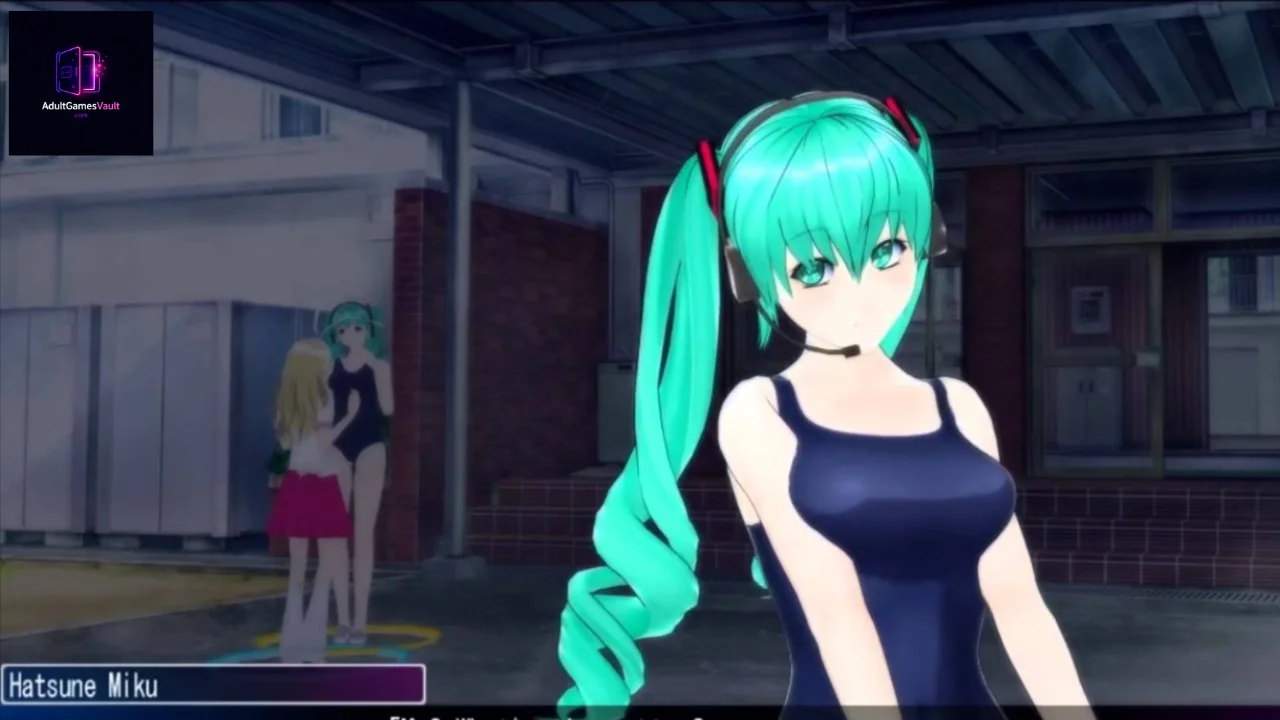
Once your roster of 21 students is complete, you select one character to play as, and the simulation officially begins. From the moment the morning bell rings, the story is entirely in the hands of the AI. Because every single student has dynamic affection, friendship, and hatred meters toward every other student in the room, the social hierarchy begins to shift immediately.
While you might be trying to quietly romance the girl sitting next to you, a completely different narrative is happening on the other side of the room. A popular, highly aggressive student might be building a massive harem of admirers, inadvertently triggering the jealousy of a quiet, “Yandere” personality type. As days pass, this jealousy will escalate. You will witness students spreading nasty rumors about each other in the hallways, getting into screaming matches during lunch, or even engaging in violent physical altercations. The story of Artificial Academy is a massive, unscripted anime soap opera. It is a game of social manipulation, voyeurism, and chaotic domestic drama where every single action creates a massive ripple effect across the entire class.
Gameplay of Artificial Academy
The gameplay loop of the original Artificial Academy was incredibly ambitious for 2011, requiring players to balance deep character customization with real-time social navigation. It is a highly systemic game where understanding the psychological traits of your classmates is the only way to succeed.
The Pioneering Character Maker
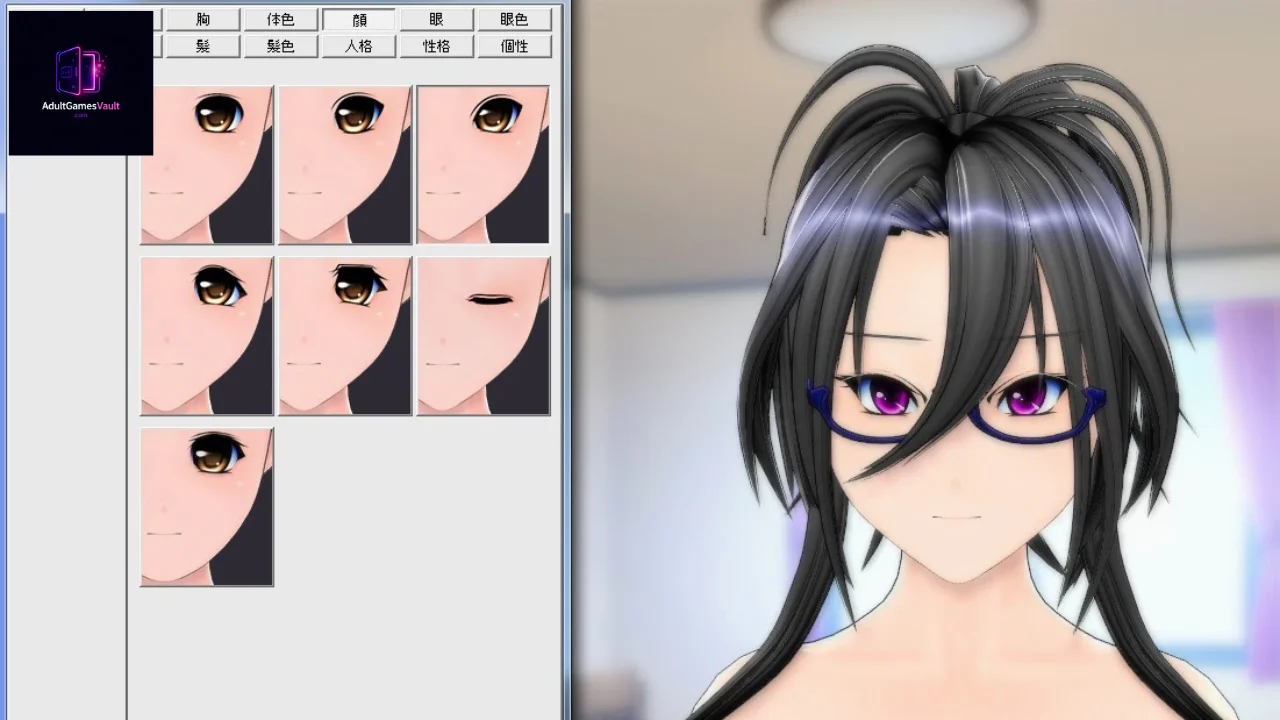
The foundation of the entire game rests on its Character Maker. While it lacks the infinite, microscopic slider adjustments of modern games like Honey Select, it was mind-blowing for its time. You can adjust hairstyles, body proportions, and facial features to recreate your favorite anime characters.
However, the true brilliance lies in the psychological customization. You must assign each student a specific “Personality Type.” These archetypes—such as the hot-headed Tsundere, the dangerously obsessive Yandere, the energetic Tomboy, or the quiet Kuudere—completely dictate how the AI operates. Furthermore, you assign specific “Traits.” Does this character get angry easily? Are they incredibly studious? Do they have a high sex drive? What specific physical features (like hair color or height) do they find attractive in others? By mixing and matching these traits, you create highly specific AI profiles that behave in logical, yet often surprising, ways once they are unleashed into the school environment.
The Living School Ecosystem
The core gameplay takes place in a fully 3D school setting, heavily managed by a daily timetable consisting of Morning, Homeroom, Lunch, Afternoon Classes, and After School periods. You navigate the school using a point-and-click interface, moving between locations like the classroom, the library, the gymnasium, the roof, and the courtyard.
Your goal is to approach your classmates and engage them in conversation. You can joke with them, ask them about their day, flirt, or even intentionally insult them. Every successful interaction builds your relationship meters. However, you must pay strict attention to the game’s “Mood” system. If you try to flirt with a girl who is currently in a terrible mood because she just failed a test, she will reject you aggressively, damaging your reputation.
The most revolutionary aspect of the gameplay is that the NPCs do not simply wait for you to interact with them. You will frequently walk into the cafeteria to find two of your custom characters already having a conversation, flirting, or arguing. If you interrupt them, they will react dynamically to your presence. The school truly feels alive, forcing you to navigate a complex web of existing relationships if you want to win someone’s affection.
Interactive 18+ Mechanics
As an Illusion title, the ultimate goal of building romantic relationships leads to the game’s highly detailed 18+ mechanics. Once you have maximized a character’s affection and successfully confessed your love to them, you can invite them to private locations around the school—such as the nurse’s office, an empty classroom, or the restroom.
The adult sequences feature real-time 3D interaction. Using your mouse, you control the pace and rhythm of the animations to build the heroine’s pleasure gauge. What made Artificial Academy stand out was how deeply integrated these scenes were with the AI personalities. The high-quality Japanese voice acting and the specific animations change drastically depending on the girl’s personality type. A shy character will act completely differently than a highly aggressive, dominant character.

Furthermore, the game features a highly stressful “risk” mechanic. Because the school is an active simulation, other students are constantly roaming the halls. If you do not lock the door during an intimate encounter, there is a high chance another student will walk in and catch you. If that student happens to have a high affection for you, their heart will break, drastically altering the social dynamics of the entire school and potentially leading to violent revenge later in the game.
Community Feedback for Artificial Academy
Because it is the older sibling of a massively popular sequel, the original Artificial Academy holds a very specific, nostalgic place within the retro adult gaming community. When looking back at forum posts and retro reviews, the feedback is a mix of immense respect for its innovation and acknowledgment of its aged mechanics.
What Players Love
The aspect of the game that receives the most universal praise is its sheer originality. In 2011, the concept of a fully simulated 3D classroom where the AI interacted with itself was completely unheard of in the adult gaming sphere. Players absolutely love the chaotic, unpredictable nature of the sandbox. The community spent thousands of hours analyzing the AI, figuring out exactly how to trigger specific events, like convincing a Yandere character to eliminate a rival. The character models, while slightly dated today, possess a unique, charming 2D-anime-in-3D style that many veteran players actually prefer over the hyper-polished models of modern games.
Constructive Criticism
On the critical side, the most glaring flaw of the original game is its clunky user interface. The navigation menus are archaic, and moving around the school can feel incredibly stiff. Furthermore, the AI can sometimes feel too random. Because the background math is so complex, players often find it deeply frustrating when a character randomly decides to hate them for seemingly no reason, ruining hours of careful relationship building.
It is also impossible to ignore that the game is heavily overshadowed by Artificial Academy 2. Because the sequel took everything the original game did and expanded upon it massively (specifically with the AAUnlimited modding framework), very few people play the original 2011 release for long-term enjoyment today. It is mostly played as a historical curiosity.
The Modding Scene and Translation
Like all classic Illusion titles, playing the game in the West requires the dedication of the modding community. To play Artificial Academy today, you must track down the community-made English translation patches. These patches translate the incredibly text-heavy UI and dialogue, remove the Japanese mosaic censorship, and fix compatibility issues that prevent the old DirectX 9 engine from running on modern operating systems. The community’s dedication to preserving this foundational title is the only reason it remains accessible.
Artificial Academy System Requirements
Because it was released over a decade ago, the hardware requirements for the original Artificial Academy are incredibly forgiving. The game was designed to run on the average Japanese office computer of the early 2010s. Literally any modern desktop or laptop can run this game at a flawless framerate.
| COMPONENT | MINIMUM REQUIREMENTS | RECOMMENDED REQUIREMENTS |
| Operating System | Windows XP / Vista / 7 | Windows 10 / 11 (Requires Japanese Locale or English Patch) |
| Processor | Intel Pentium 4 2.0 GHz | Intel Core 2 Duo / Core i3 or equivalent |
| Memory (RAM) | 1 GB RAM | 2 GB RAM (4 GB recommended for modern OS) |
| Graphics | DirectX 9.0c Compatible GPU (128 MB VRAM) | Any modern integrated or dedicated GPU |
| DirectX | Version 9.0c | Version 9.0c |
| Storage | 4 GB available space | 6 GB available space (To accommodate translation patches) |
Optimization Note: If you are attempting to run the original, unmodded Japanese release on a modern Windows 10 or 11 machine, the game will almost certainly crash on startup or display unreadable “mojibake” text. You must use a third-party emulator like Locale Emulator to force the executable to run in a Japanese environment. Installing a community-made English patch usually resolves these registry issues automatically, making it the highly recommended way to play.
Conclusion
The original Artificial Academy is a monumental, brilliantly chaotic time capsule that completely redefined the possibilities of the 3D adult gaming genre. By giving players the tools to create a living, breathing ecosystem of custom anime characters and stepping back to let the artificial intelligence take the wheel, Illusion created a masterpiece of emergent storytelling.
While its user interface is undeniably clunky by today’s standards and its sequel ultimately perfected the formula, the raw charm and historical significance of this 2011 release cannot be overstated. It is a game where jealousy, romance, and unscripted drama rule the hallways. If you are a dedicated fan of visual novels, love deep psychological stat management, and want to experience the very genesis of the modern anime sandbox genre, the original Artificial Academy is an absolute classic that deserves your respect and attention.