
 Games
Games Game Series
 Guide
Guide
 简体中文
简体中文 हिन्दी
 한국어
한국어 Tiếng Việt
 ไทย
ไทยRoom Girl (known in Japan as ROOMガール) is a highly ambitious, 18+ 3D life simulation and sandbox game developed by the legendary (and now-defunct) Japanese studio, Illusion. Regarded as a titan in the 3D adult gaming industry for over two decades, Illusion released Room Girl as their final major flagship title in late 2022 before ultimately shutting down and rebranding in 2023. Stepping away from the pure survival mechanics of AI: The Somnium Files (AI Shoujo) or the pure brothel-management of Honey Select 2, this title takes heavy inspiration from Western life simulators like The Sims, dropping players into a modern cityscape to play matchmaker, director, and voyeur.
Boasting what is arguably one of the most powerful and detailed 3D anime character creators in the entire gaming industry, Room Girl is a massive digital playground. While its vanilla gameplay loop may not appeal to everyone, its true value lies in the endless creative freedom it offers to players willing to tinker, mod, and build their own worlds.
Due to the studio’s closure, the game does not have an official Western Steam release. However, it remains highly accessible through Japanese storefronts (like DMM) and third-party physical importers, with a massive English modding community keeping the game alive.
Story of Room Girl
Unlike traditional visual novels or RPGs that feature a linear narrative, a main protagonist, and a definitive ending, Room Girl features absolutely no predetermined story. Instead, the game operates entirely on emergent storytelling—a narrative driven completely by the player’s imagination and the interactions they orchestrate between the characters they create.
You play the role of an invisible, omniscient overseer monitoring a bustling, contemporary Japanese city. The city is divided into several distinct hubs and workplaces, including corporate offices, hospitals, schools, casinos, idol stages, and residential apartment buildings.
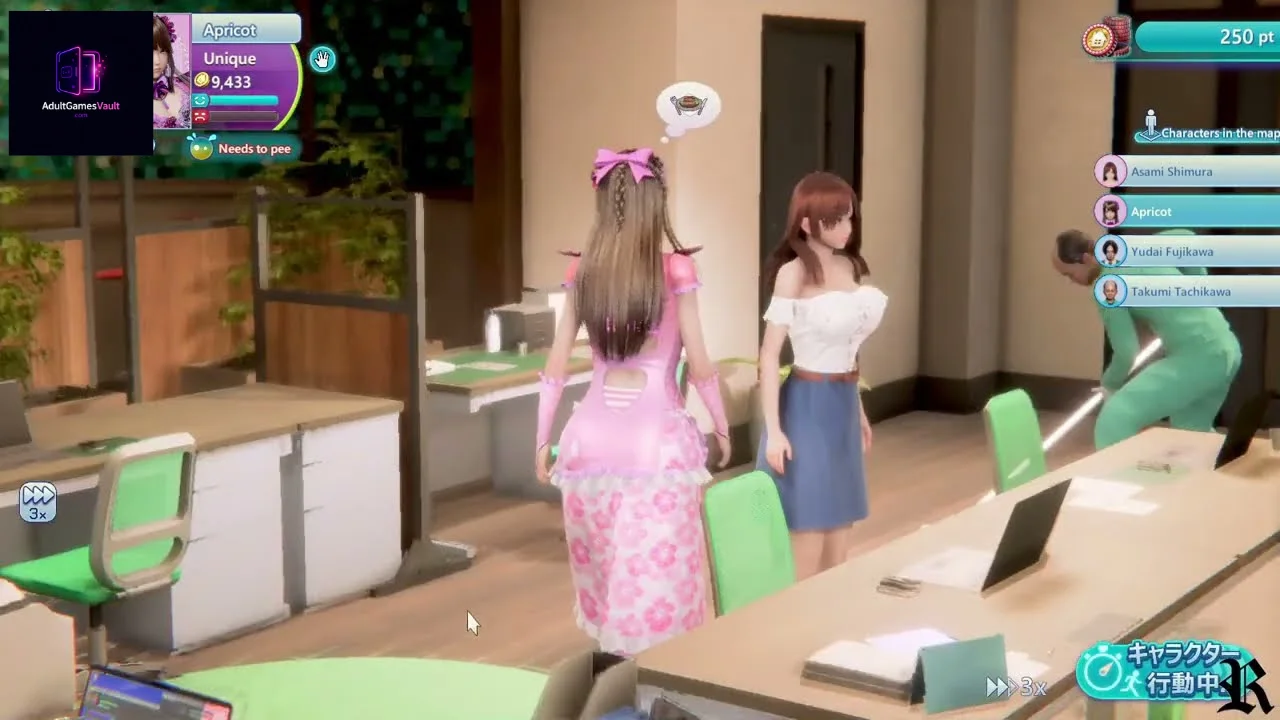
The story of your particular playthrough begins in the Character Maker. You are tasked with populating the city with up to 35 active residents at a time. The game provides various archetypes and occupations for your characters: you can create a stressed-out office worker, a glamorous pop idol, a diligent nurse, a shady casino dealer, or a completely ordinary college student. Once you place these characters into their respective environments, their daily lives begin to unfold.
As the “director” of this city, you dictate who meets whom. A chance encounter at the local clinic might lead to a blossoming romance between a doctor and a patient. An after-work drinking session could result in a secret office affair. Because there is no overarching villain to defeat or grand mystery to solve, the narrative depth of Room Girl is entirely dependent on how invested you are in the digital dolls you create. It is a sandbox in the purest sense, offering a blank canvas where you can write your own modern-day slice-of-life or romantic drama.
Gameplay of Room Girl
The gameplay of Room Girl is divided into three distinct pillars: the Life Simulation mode, the Character Creator, and the highly acclaimed Studio Mode. Each offers a completely different experience, catering to different types of players.
The Life Simulation Sandbox
The core gameplay loop is heavily reminiscent of The Sims, albeit significantly streamlined. You do not control characters directly with a joystick or keyboard. Instead, you observe them going about their daily routines in 3D environments. By clicking on a character, you can open an interaction menu to intervene in their lives. You can command them to work, take a break, call a friend, or approach another character.
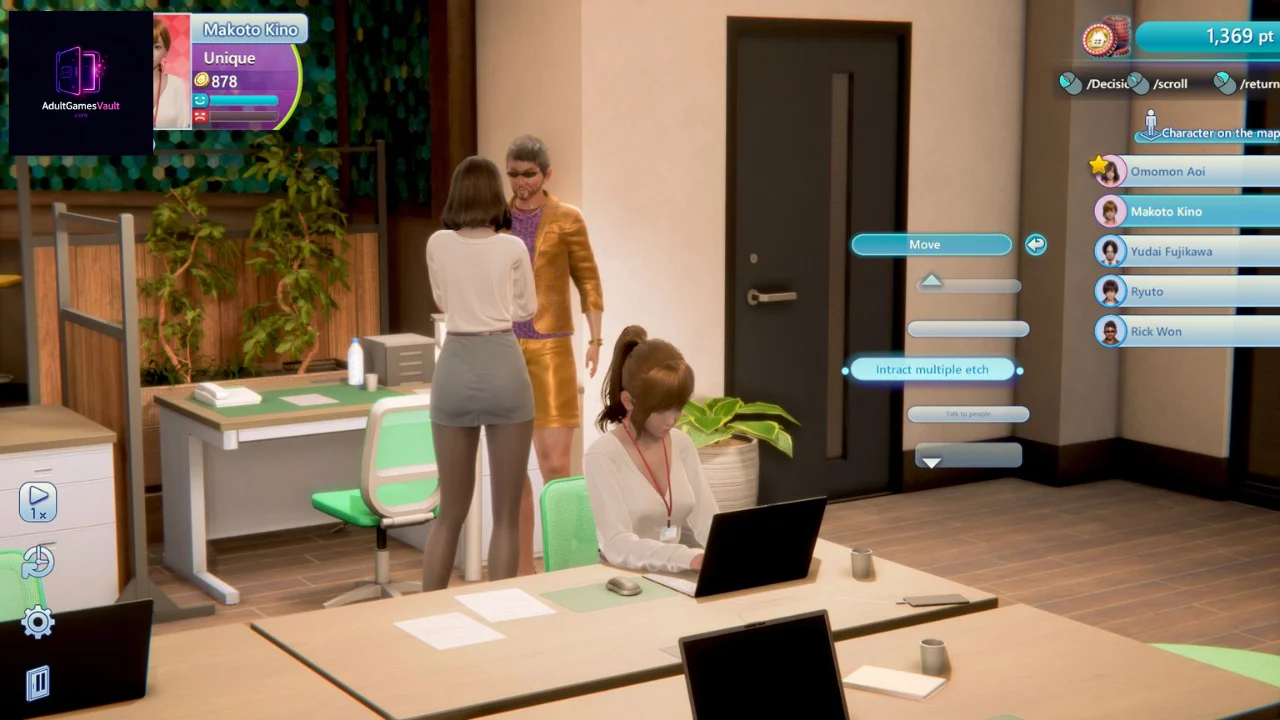
When two characters interact, you can steer their conversation to build specific hidden stats: Friendship, Romance, and Lewdness. Building Friendship allows characters to invite each other to different locations across the city. Building Romance leads to dating scenarios, while maxing out the Lewdness stat unlocks the game’s adult features. It is a game of patience and micromanagement, as you constantly shift your camera around the city to ensure your favorite couples are spending time together and progressing their relationship meters.
The Legendary Character Creator
Illusion built its entire reputation on its character creation engines, and Room Girl represents the absolute pinnacle of that technology. The depth of customization is staggering. You have access to hundreds of sliders to adjust every conceivable aspect of a character’s anatomy—from the exact angle of their jawline to the specific curvature of their eyelashes.
The clothing system is equally robust, allowing you to layer multiple pieces of clothing, adjust their colors, and apply custom textures. Furthermore, Room Girl is backward-compatible with character cards from Honey Select 2 and AI Syoujyo. Because character data is ingeniously saved inside simple .png image files, players can easily go online, download a .png file of their favorite anime character or celebrity made by the community, and instantly drop them into their game.
18+ Mechanics and Room Girl Paradise
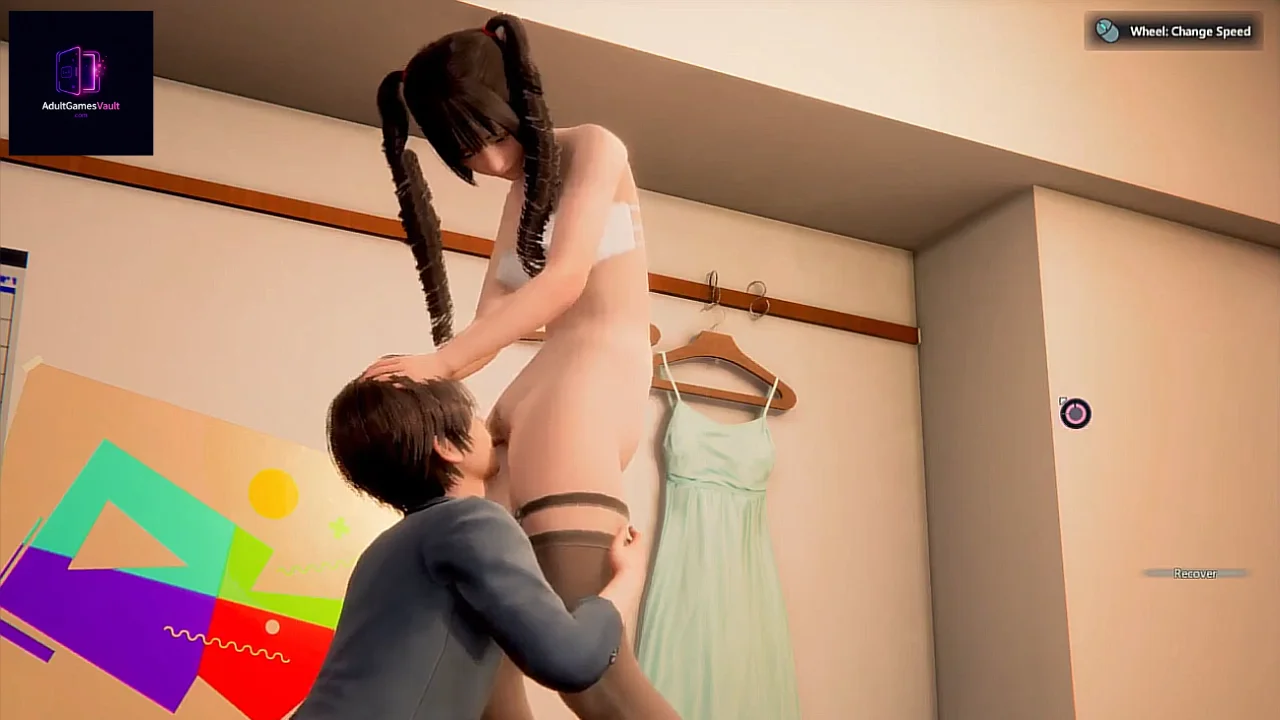
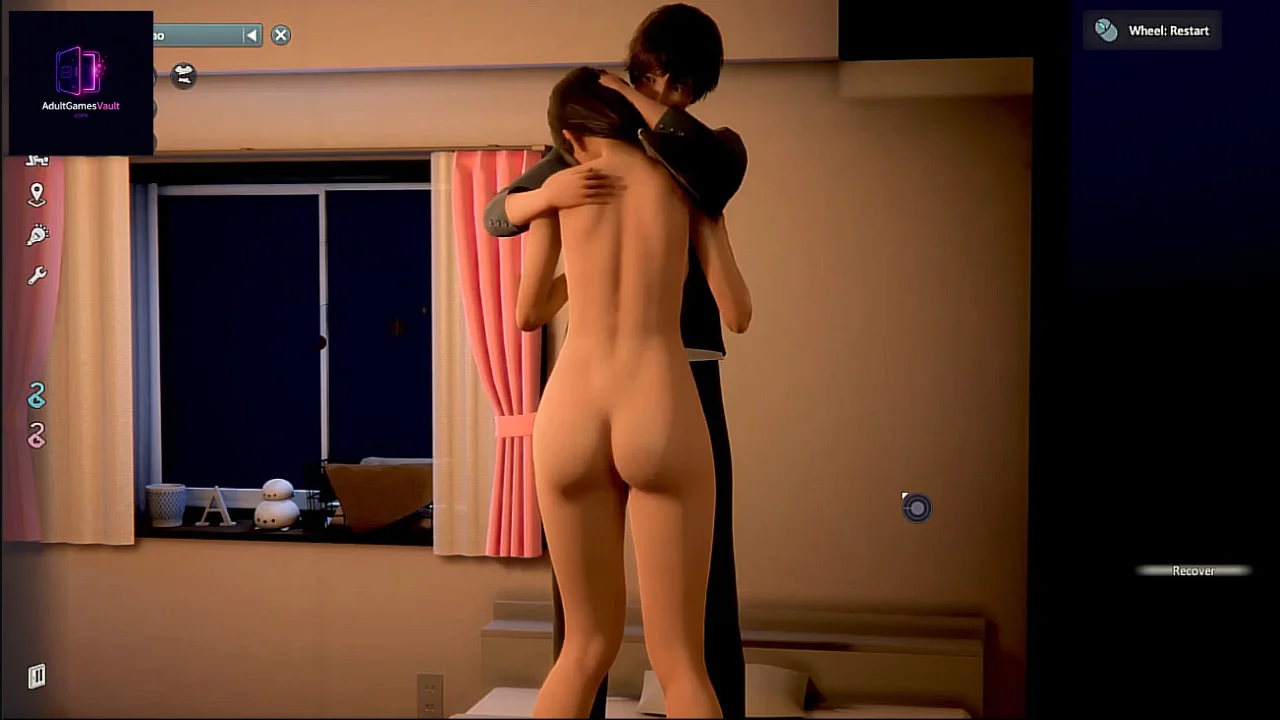
As an 18+ title, the culmination of building relationships results in highly detailed, fully animated intimate scenes. Illusion’s engine provides real-time physics, dynamic lighting, and a wide variety of positions that players can control and adjust on the fly. In 2023, Illusion released an expansion pack titled Room Girl Paradise, which vastly expanded the base game. It introduced new occupations, new clothing items, and entirely new maps specifically designed for adult content (such as a dedicated SM room), adding much-needed variety to the interactions.
Studio Mode (NEO Studio)
For many players, the Life Simulation aspect is completely ignored in favor of Studio Mode. This is essentially a powerful 3D posing and rendering software built directly into the game. In Studio Mode, you can load any map, spawn any number of characters, apply custom animations, manipulate individual bone structures, set up complex lighting rigs, and create stunning 3D dioramas. Many artists and content creators use this mode exclusively to create high-quality webcomics, digital art, and custom scenes.
Community Feedback for Room Girl
The community consensus surrounding Room Girl is fascinatingly divided, heavily highlighting the difference between the “vanilla” out-of-the-box experience and the “modded” experience.
Critiques of the Vanilla Game
Upon its initial Japanese release, hardcore Illusion fans were highly critical of the game’s life simulation mechanics. Many reviews noted that compared to the depth of The Sims 4 or even Illusion’s older titles like Artificial Academy 2, the gameplay loop in Room Girl felt shallow and repetitive. Players found that once you successfully paired a few couples together, there wasn’t much else to do. Furthermore, the game was heavily criticized for its poor optimization; the proprietary engine struggles with multithreading, meaning even players with high-end GPUs experience massive frame drops (sometimes down to 20-30 FPS) when loading multiple characters in a single room.
The Saving Grace: The Modding Community
Despite the criticisms of the base gameplay, Room Girl maintains a massive, highly dedicated player base. This is entirely thanks to the international modding community, specifically the creation of the “HF Patch” (spearheaded by modder ManlyMarco).
The community overwhelmingly agrees that playing the game without the HF Patch is a mistake. This unofficial, massive compilation patch does everything the developers left out: it fully translates the UI and dialogue into English, completely removes the Japanese mosaic censorship, fixes broken code to improve load times, and adds hundreds of community-made clothing items, hairstyles, and plugins. With the HF Patch installed, the community views Room Girl not as a traditional game, but as the ultimate 3D sandbox engine. Players praise the sheer visual fidelity of the character models, noting that no other company has managed to create an anime-styled 3D rendering engine that looks this good.
Room Girl System Requirements
Because Room Girl features incredibly high-polygon character models, real-time physics, and dynamic lighting, it is a very demanding title. Furthermore, the engine is notoriously unoptimized for modern multi-core processors, meaning you will need brute-force hardware to maintain a smooth 60 FPS, especially when using Studio Mode with multiple characters.
| COMPONENT | MINIMUM REQUIREMENTS | RECOMMENDED REQUIREMENTS (For Modded Gameplay) |
| Operating System | Windows 10 / 11 (64-bit only) | Windows 10 / 11 (64-bit only) |
| Processor | Intel Core i3-8100 | Intel Core i7-8700 / AMD Ryzen 5 3600 or better |
| Memory (RAM) | 8 GB RAM | 16 GB RAM (32 GB highly recommended for Studio Mode) |
| Graphics | NVIDIA GeForce GTX 1060 (6GB VRAM) | NVIDIA GeForce RTX 2060 / RTX 3060 (12GB VRAM) |
| DirectX | Version 11 | Version 11 |
| Storage | 30 GB available space | 100+ GB available space (SSD absolutely mandatory for mods) |
Important Optimization Note: If you plan on downloading community mods, character cards, and the HF Patch, your installation folder will easily exceed 100 GB. Installing this game on a traditional HDD will result in load times exceeding 10 minutes. An NVMe SSD is strongly required.
Conclusion
Room Girl is a bittersweet milestone in the history of adult gaming—a visually stunning swan song from Illusion that showcases both the absolute peak of their technical 3D artistry and the recurring flaws in their gameplay design.
If you are approaching this title hoping for a deep, complex life simulator with challenging resource management and unpredictable AI, you will likely walk away disappointed. However, if you are a creative tinkerer, a virtual photographer, or someone who loves spending hours adjusting sliders to create the perfect 3D character, Room Girl is an unparalleled masterpiece. When combined with the community’s HF Patch, it transforms from a mediocre simulation game into the most powerful, freeform 18+ 3D sandbox available on the market today. It requires a beefy PC and some patience to set up, but the visual payoff is well worth the effort.
If you’re looking for a more focused and accessible alternative built around the same Illusion-style interaction system, PlayHome is a great next step—offering a simpler sandbox with smooth performance, strong customization tools, and a more straightforward, user-friendly experience.