
 Games
Games Game Series
 Guide
Guide
 简体中文
简体中文 हिन्दी
 한국어
한국어 Tiếng Việt
 ไทย
ไทยDead-End City Blues OD Edition is a card-based command battle RPG developed by AleCubicSoft and published by Mango Party / Mango Party News. It released on Steam on October 17, 2024.
The game stands out because of its dystopian cyberpunk setting. Official store text places it in Neo-Yokohama in the year 2080, where a lone girl from the slums sets out to track down the source of the illegal drug “Elysion” and wipe it out. That gives the game a much grimmer and more urban tone than a typical fantasy RPG.
In terms of gameplay identity, Steam describes it as a game where you strengthen your deck, acquire items, and defeat criminals through card battles, which makes it feel closer to a deckbuilding RPG with command-based fights than to a standard exploration-heavy JRPG.
With its mix of cyberpunk atmosphere, card-based battles, and a revenge-driven story hook, Dead-End City Blues OD Edition looks like a strong fit for players who enjoy darker urban RPGs with a more focused combat structure.
You can buy this game here:
https://store.steampowered.com/app/2756380/DeadEnd_City_Blues_OD_Edition/
If you enjoy the darker tone and combat-focused progression of Dead-End City Blues OD Edition, then Half-Demon Shinobi is a great follow-up for players who want a faster roguelite action experience with a supernatural edge. DEAD END COLOSSEUM is another strong choice if you prefer a more brutal, survival-driven RPG structure centered on deadly arena battles. And for those who want to shift into a more stylish sci-fi setting while keeping the action-heavy appeal, X-Angels is also worth checking out.
Dead-End City Blues OD Edition – Story
Dead-End City Blues OD Edition is set in Neo-Yokohama in the year 2080, a city presented as one of the most dangerous places in Japan. At the center of the story is a lone girl from the slums who sets out to destroy the source of the illegal drug Elysion, which has spread through the city and poisoned its people. That premise gives the game a much darker and more urban tone than a standard fantasy RPG.
The game’s narrative appears to stay tightly focused on that revenge-and-purge setup rather than expanding into a huge world-spanning adventure. Public descriptions frame the heroine’s journey as a direct battle against the criminals and systems feeding the city’s decay, which makes the story feel more personal and grounded in survival, desperation, and anger.
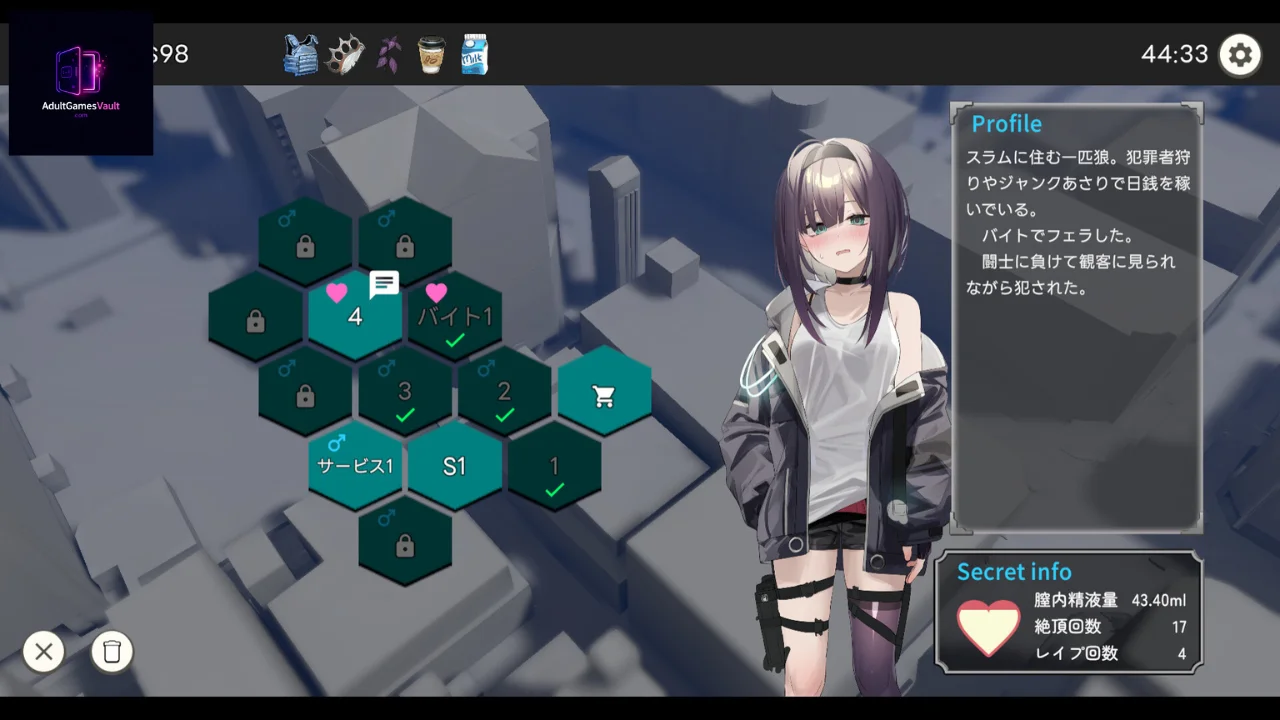
Because the setting is a dystopian cyberpunk city instead of a medieval fantasy world, the story also gains a stronger sense of grime and social collapse. Neo-Yokohama is not just a backdrop for battles; it is part of the conflict itself, with Elysion embedded in the city’s underworld and shaping the heroine’s mission from the start.
Overall, Dead-End City Blues OD Edition tells a dark cyberpunk revenge story about a slum girl fighting back against the drug that has corrupted her city, giving the game a more focused and hostile narrative identity than many small-scale RPGs.
Dead-End City Blues OD Edition Gameplay
The gameplay of Dead-End City Blues OD Edition revolves around a card-based command battle system. Both Steam and GameFAQs describe it as an RPG where you strengthen your deck, collect items, and use card battles to take down criminals across Neo-Yokohama.
A big part of the loop is deck growth during progression. After defeating enemies, players are offered one of three cards to add to their deck, which means each run or playthrough gradually shapes itself around the cards you choose and the kind of archetype you want to build. That gives the game a stronger deckbuilding identity than a standard turn-based RPG with static skills.
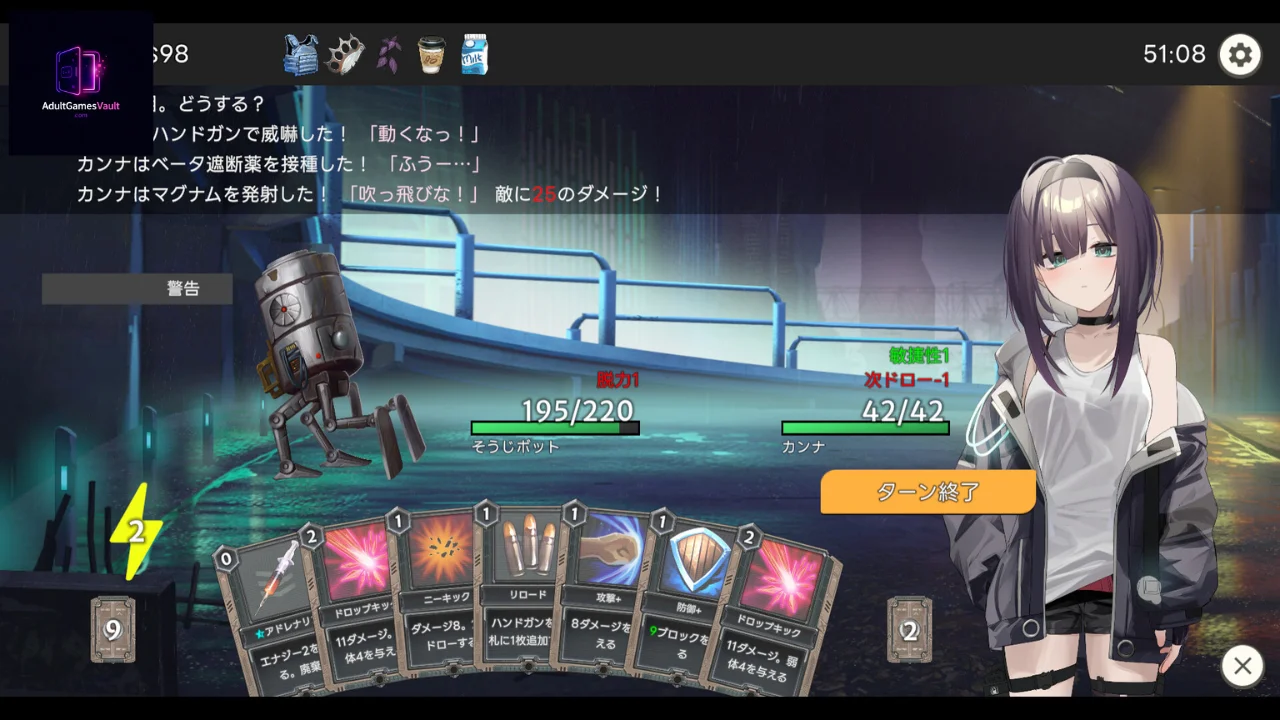
The game also appears to lean into a roguelike or run-based structure. Public player impressions describe it as a roguelike card-battling RPG, which suggests the challenge comes not only from individual fights, but also from how well you manage your build, survive bad draws, and adapt your strategy over time.
Another important part of the gameplay is its high-risk progression system. GameFAQs’ public summary notes that if Kanon loses a battle, there are heavy consequences, and repeated defeats can push the player toward a bad ending. That makes combat feel more tense, because each fight matters beyond simple win-or-lose progression.
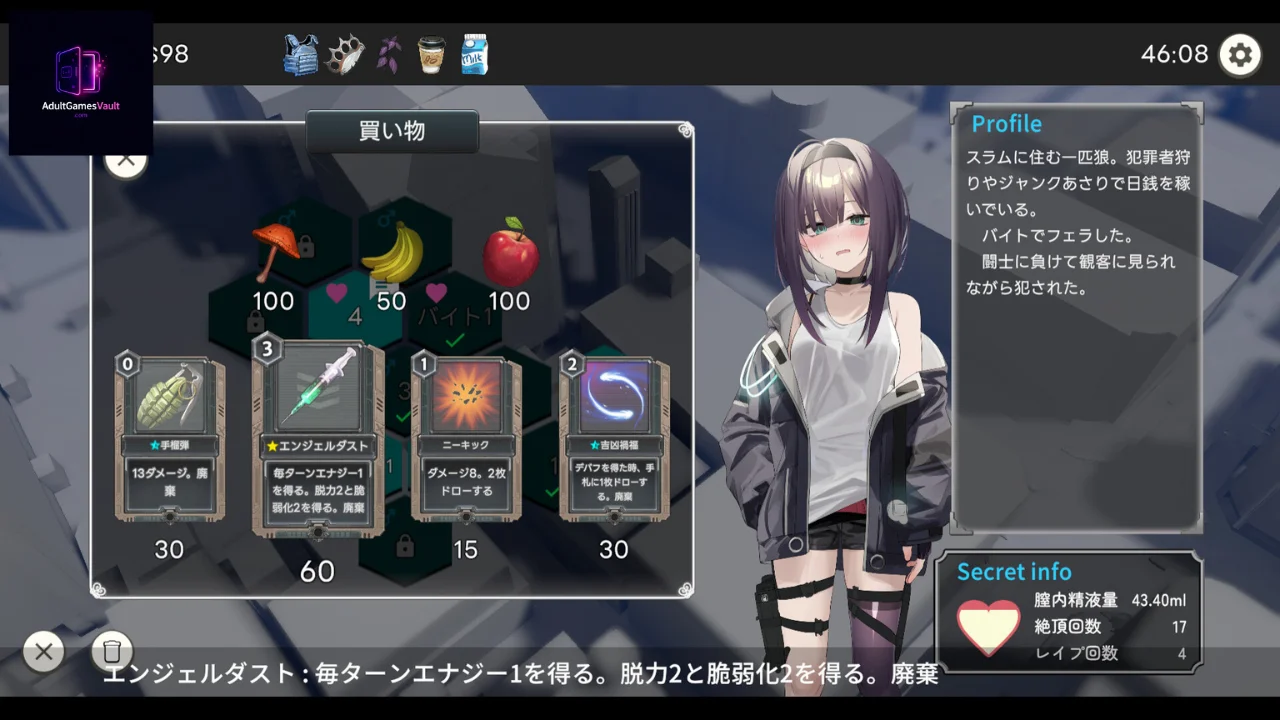
Overall, Dead-End City Blues OD Edition looks like a focused cyberpunk deckbuilding RPG built around turn-based card battles, post-fight deck growth, and survival through a dangerous urban underworld, making it a strong fit for players who enjoy darker card-based progression systems.
Dead-End City Blues OD Edition Review and Community Feedback
Dead-End City Blues OD Edition has been received quite well by players. Steam’s public search result shows the game at Very Positive with 549 user reviews, while Steambase reports a player score around 86/100 from 544 reviews, with 470 positive and 74 negative at the time of its snapshot.
One of the game’s biggest strengths seems to be its core identity as a cyberpunk card-battle RPG. A public Steam recommendation describes it as a game with strategic deck-building mechanics, multiple endings, and unlockable scenes, which lines up with the general impression that its biggest appeal comes from combining turn-based card battles with a grim urban setting rather than relying on broad open-world exploration.

The game also appears to benefit from its distinctive atmosphere and presentation. Third-party review analysis summarizing player trends says the game is often praised for its art, animation, and voice work, suggesting that the style and audiovisual presentation leave a strong impression even beyond the card-battle system itself.
At the same time, feedback is not entirely one-sided. The same Steam review snippet that praises its deck-building also notes that limited card variety may reduce replay appeal, and broader review analysis points to concerns about short playtime, difficulty balance, and relatively simple mechanics. In other words, players who enjoy focused, shorter card-RPGs may like it a lot, but those expecting deep long-term deck variety may find it thinner than the best-known games in the genre.
Overall, Dead-End City Blues OD Edition comes across as a well-liked niche cyberpunk deckbuilder whose biggest selling points are its strong presentation, dark urban tone, and accessible card-battle structure. Its main weaknesses seem to be limited replay depth and modest scope, but the overall player response suggests it still lands as a solid title for people who enjoy darker, more focused turn-based card RPGs.
System Requirements for Dead-End City Blues OD Edition
Before installing Dead-End City Blues OD Edition, it’s worth checking the official PC requirements. The Steam search snippet shows the game’s minimum requirements as Windows 10, Intel i5+, 6 GB RAM, DX10/DX11/DX12-capable graphics, DirectX 10, and 600 MB of storage. Public mirrors of the Steam requirements also show a recommended target of Windows 10, Intel i5+, 8 GB RAM, DX11/DX12 graphics, DirectX 11, and 1 GB of storage.
| Component | Minimum Requirements | Recommended Requirements |
| Operating System | Windows 10 | Windows 10 |
| Processor | Intel i5+ | Intel i5+ |
| Memory (RAM) | 6 GB RAM | 8 GB RAM |
| Graphics | DX10, DX11, DX12 capable | DX11, DX12 |
| DirectX | Version 10 | Version 11 |
| Storage | 600 MB available space | 1 GB available space |
Based on those specs, Dead-End City Blues OD Edition falls into the low-to-moderate requirement range. It is clearly much lighter than a large 3D RPG, but it still asks for more RAM than very small 2D indie titles, so a modern PC with 8 GB RAM is the safer target for smoother play.
In practical terms, if your system already runs lightweight turn-based RPGs or card-battle indies without trouble, this one should be manageable as long as you meet the Windows 10 + Intel i5-class CPU + 6–8 GB RAM range.
Conclusion
Overall, Dead-End City Blues OD Edition looks like a focused cyberpunk card-battle RPG that stands out through its Neo-Yokohama setting, revenge-driven story hook, and command-based deck progression. Instead of trying to be a huge open-world RPG, it seems built around a tighter structure where the appeal comes from surviving dangerous encounters, strengthening your deck, and pushing deeper into the city’s criminal underworld.
One of the game’s strongest points is its clear identity. The mix of a slum-born heroine, a city poisoned by Elysion, and a card-based combat system gives it a darker and more distinctive feel than a generic fantasy RPG. That same identity also seems to be part of why it works well for players who enjoy niche urban RPGs with a stronger atmosphere.
Its biggest appeal will likely be for players who enjoy deckbuilding, turn-based battles, and grim cyberpunk progression more than broad exploration or heavy simulation systems. Since the game appears so tightly centered on combat and city-driven tension, it works best when approached as a more concentrated RPG experience rather than a giant branching adventure.
For players looking for a dark urban RPG with card battles, a revenge storyline, and a strong cyberpunk tone, Dead-End City Blues OD Edition comes across as a stylish and promising title.