
 Games
Games Game Series
 Guide
Guide
 简体中文
简体中文 हिन्दी
 한국어
한국어 Tiếng Việt
 ไทย
ไทยAmbrosia is a highly engaging, narrative-driven 18+ role-playing game developed by the indie doujin circle Shimobashira Workshop and published for Western audiences by Kagura Games in January 2021. In the vast, often overcrowded market of RPG Maker adult titles, it can be incredibly difficult for a single game to stand out. Many titles in this specific genre heavily prioritize adult interactions at the severe expense of actual gameplay, resulting in unbalanced, tedious experiences. Ambrosia completely shatters that stereotype.
Widely regarded by the Kagura Games community as one of the absolute best titles in the publisher’s massive catalog, this game positions itself as a full-fledged, challenging, and mechanically deep JRPG first and foremost. It utilizes its adult themes not as a replacement for gameplay, but as a dynamic storytelling tool that completely adapts to the player’s choices. By seamlessly blending classic top-down exploration, strategic turn-based combat, and a highly complex “purity versus corruption” alignment system, Ambrosia delivers a rich, replayable fantasy adventure that appeals to both hardcore RPG veterans and fans of character-driven visual novels.
You can buy the game here:
https://store.steampowered.com/app/1078350/Ambrosia
(Note: As is standard procedure with all titles published by Kagura Games on Western digital storefronts like Steam, the base version of the game is heavily censored to comply with platform regulations. To experience the complete, uncut adult content and CG illustrations, players must download the free 18+ restorative patch directly from the official Kagura Games website).
If you enjoy the deep RPG systems and choice-driven storytelling in Ambrosia, then Alma and the Fragments of Cursed Memories is a great follow-up—offering a more compact, replayable experience with unique combat mechanics and a focus on character-driven progression. And for players who want to explore a darker, more atmospheric world, the Black Souls series delivers a haunting, lore-rich journey filled with challenging gameplay and twisted fantasy themes.
Story of Ambrosia
The narrative foundation of Ambrosia is surprisingly grounded, shifting away from massive “save the world” tropes in favor of a much more personal, character-driven journey. You take on the role of Flode, a young, earnest, and highly dedicated apprentice priestess who faithfully serves Leight, the God of Light. Her life within the church is peaceful and structured until she is suddenly and unfairly swept up in a massive political scandal involving the family of a local duke.
To protect the church’s reputation, the high officials decide it is best to quickly sweep the incident under the rug. Flode is effectively exiled, sent far away to the remote, highly isolated island of Cerbes. Her official mission is to manage an ancient, run-down shrine and spread the faith of Leight to the locals. However, Flode harbors a deeply personal, hidden motive for accepting this exile without protest: she is desperately searching for a dear friend who was recently captured and taken to this exact island.
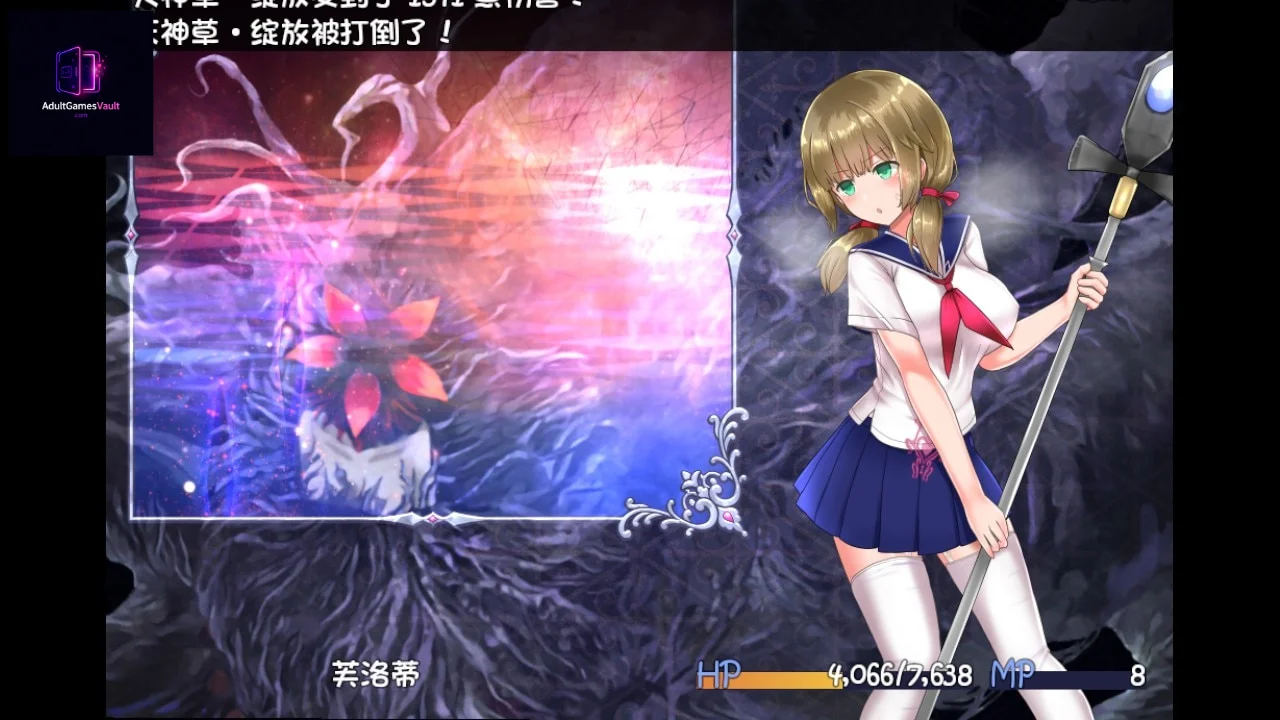
Upon arriving on Cerbes, Flode quickly realizes that she is completely out of her depth. The island is incredibly hostile, overrun by dangerous monsters, treacherous dungeons, and a populace that is highly suspicious of outsiders. Furthermore, she arrives with absolutely no money, forcing her to figure out how to survive in an unforgiving economy.
The true brilliance of the story lies in its moral ambiguity and player agency. As Flode navigates the island, uncovers ancient relics, and desperately tries to earn enough money to rescue her friend, her faith is constantly tested. Will she remain a pure, steadfast servant of the God of Light, fighting through the hardships with sheer willpower? Or will she succumb to the island’s darker temptations, accepting the forbidden powers of the “Noir Blessings” and sacrificing her purity to achieve her goals faster? The narrative branches significantly based on these choices, leading to multiple different endings and character arcs that make Flode a remarkably compelling protagonist.
Gameplay of Ambrosia
The gameplay loop of Ambrosia is incredibly dense, rewarding players who take the time to explore its mechanics, engage with side quests, and carefully plan their character progression. It is divided into several distinct pillars that elevate it above standard RPG Maker fare.
Open-Ended Exploration and Questing
Unlike highly linear RPGs, Ambrosia embraces an open-ended exploration system. Once you establish your base at the old shrine, the entire island of Cerbes is practically open to you. You can tackle the various dungeons, forests, and cave systems in almost any order you choose. However, the game does not hold your hand; if you wander into a high-level area too early, you will quickly be decimated by the local wildlife.
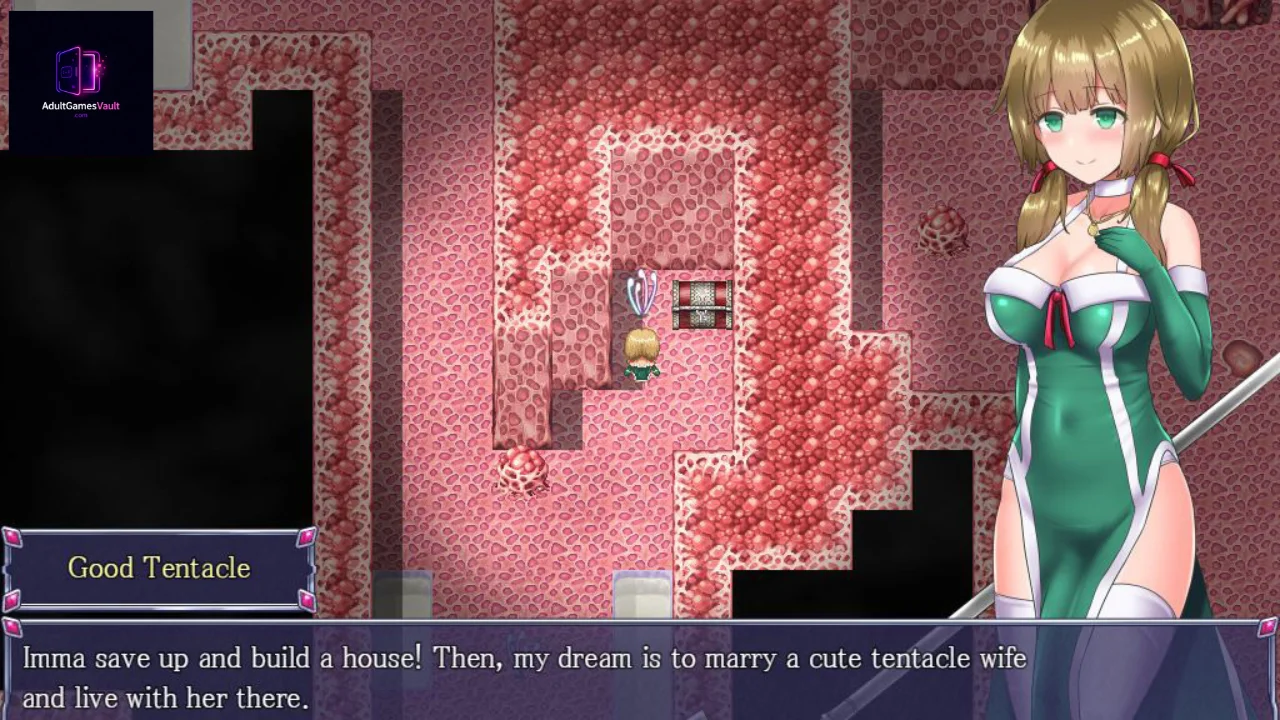
To progress safely, you must engage with the island’s inhabitants. The game features a highly robust quest system. By speaking to the locals in the main town, you can take on various jobs ranging from simple monster-hunting bounties and material gathering to highly complex, multi-stage narrative side quests. Completing these quests is absolutely essential, as money is incredibly scarce on Cerbes and you need every coin you can get to purchase better equipment and upgrade your shrine with new furniture.
Strategic Turn-Based Combat
The combat in Ambrosia adheres to a classic, turn-based JRPG structure, but it places a massive emphasis on strategy over brute force. You cannot simply mash the “Attack” button and expect to win, especially during the game’s challenging boss encounters.
Players must carefully manage Flode’s HP, MP, and TP (Tactical Points) during every battle. Exploiting elemental weaknesses and understanding enemy attack patterns is crucial. As you level up, Flode gains access to a wide array of holy magic, physical strikes, and defensive buffs. The combat system rewards careful preparation, ensuring that you always carry the correct alchemical potions and status-curing items before diving deep into a dungeon.
The Purity and Corruption System
The absolute standout mechanical feature of the game is its dual-faith alignment system. As an RPG with 18+ themes, the game leaves the level of adult content entirely up to the player.
If you wish to play the game as a traditional, wholesome RPG, you can pursue the “Virgin Route.” This requires you to avoid defeat in battle, reject shady job offers from the townsfolk, and strictly follow the teachings of Leight. Maintaining high purity unlocks specific holy skills and alters how the townsfolk respectfully interact with Flode.
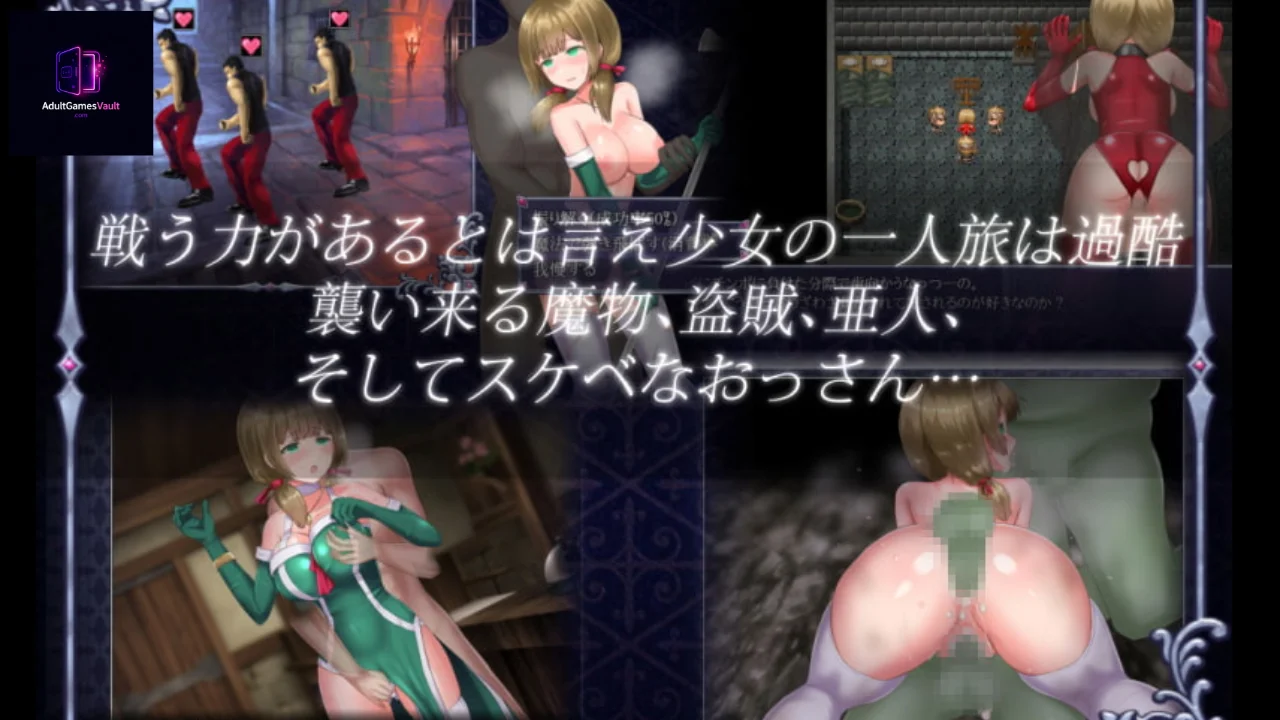
Conversely, the player can choose to walk the path of corruption. By taking on indecent jobs to earn quick cash, intentionally submitting to monsters in battle, or praying to the dark statues scattered across the island, Flode’s “Indecency” stat will skyrocket. Raising this stat lowers her Priestess Aptitude but unlocks the highly powerful “Noir Blessings,” granting her devastating dark magic and entirely new skill trees. This completely alters the game’s dialogue, as Flode becomes more confident and aggressive in her sexuality, unlocking dozens of highly detailed 18+ CG scenes and animations.
Community Feedback for Ambrosia
Since its localization by Kagura Games, Ambrosia has maintained a “Very Positive” rating on Steam, boasting thousands of highly favorable reviews. It is frequently cited in community discussions as a prime example of how to do an adult RPG correctly.
What Players Love
The most universal praise directed at the game is aimed at its narrative depth and the sheer likability of the protagonist. Flode is a fantastic character; she is earnest, hard-working, and genuinely wants to help people, which makes her journey—whether she stays pure or falls to corruption—deeply engaging. Players absolutely love that the game provides genuine consequences for their actions. The ability to actually complete the game on a pure route without being forced into 18+ encounters makes the choice to pursue the corruption route feel incredibly impactful and player-driven.
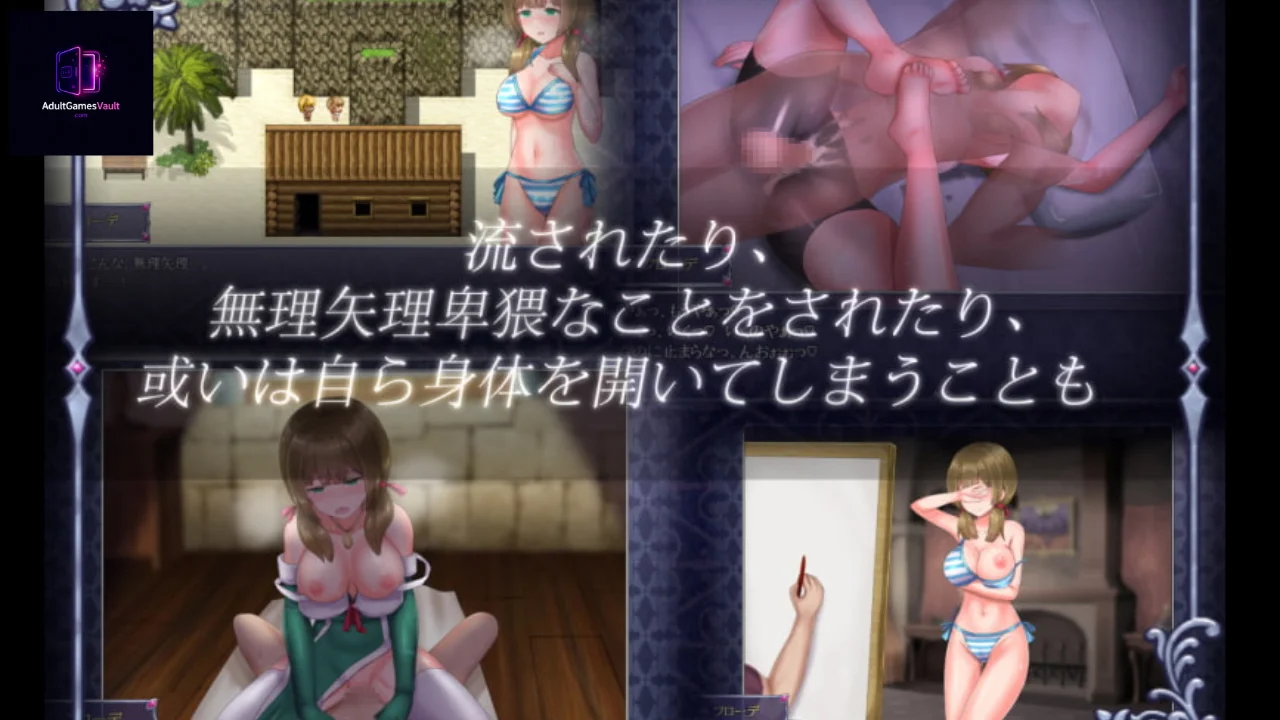
Additionally, the art style is frequently highlighted as a major positive. The character sprites, the enemy designs, and the adult CG illustrations are remarkably high-quality, vibrant, and expressive, standing head and shoulders above many older RPG Maker titles. The sheer amount of side content, post-game dungeons, and hidden secrets provides excellent value for the game’s price point.
Constructive Criticism
On the critical side, the primary complaint from the community revolves around the game’s economy and pacing. Because money is so difficult to come by in the early stages of the game, players often find themselves forced to grind the same low-level enemies or repeat the fishing mini-game just to afford basic healing items. This grinding can artificially inflate the playtime and break the narrative pacing.
Furthermore, some players have noted that certain late-game side quests are overly obtuse. Finding specific crafting materials or figuring out exactly which NPC to speak to in order to trigger the next stage of a quest often requires a guide, as the in-game journal does not always provide the clearest directions. Lastly, the standard limitations of the RPG Maker engine—such as basic map tile assets and occasionally clunky menu navigation—are still present, though most players agree that the writing and mechanics easily overshadow these engine constraints.
Ambrosia System Requirements
One of the greatest benefits of the RPG Maker engine is its incredible accessibility. Ambrosia is an extremely lightweight game that does not require a dedicated gaming rig. Virtually any modern computer, including low-end office laptops and older desktops, can run this title flawlessly without any performance issues.
| COMPONENT | MINIMUM REQUIREMENTS | RECOMMENDED REQUIREMENTS |
| Operating System | Windows 7 / 8 / 8.1 / 10 | Windows 10 / 11 (64-bit) |
| Processor | Intel Core2 Duo or better | Intel Core i3 or better |
| Memory (RAM) | 4 GB RAM | 4 GB RAM |
| Graphics | DirectX 9/OpenGL 4.1 capable GPU | Any modern integrated or dedicated GPU |
| DirectX | Version 9.0 | Version 9.0 |
| Storage | 2 GB available space | 3 GB available space |
Optimization Note: While the game is exceptionally light on hardware, players should ensure they download and apply the 18+ patch before starting a new save file. Applying the patch midway through a playthrough can occasionally cause minor visual bugs or skipped dialogue flags, so it is highly recommended to have the complete installation ready from the very beginning.
Conclusion
Ambrosia is a phenomenal, highly polished gem within the Kagura Games publishing lineup. By successfully blending the nostalgic charm of classic 2D turn-based JRPGs with a deeply engaging, player-driven narrative about faith, survival, and temptation, Shimobashira Workshop created an experience that is both mechanically satisfying and narratively compelling.
Whether you choose to guide Flode down the righteous path of a pure priestess, relying on strategy and perseverance to overcome the island’s threats, or you decide to embrace the dark, highly detailed 18+ corruption mechanics for immense power, the game respects your choices and delivers a fantastic adventure. If you are a fan of traditional RPGs, love robust questing systems, and appreciate a game that balances high-quality adult content with genuinely good gameplay, Ambrosia is an absolute must-play title that easily earns its stellar reputation.