
 Games
Games Game Series
 Guide
Guide
 简体中文
简体中文 हिन्दी
 한국어
한국어 Tiếng Việt
 ไทย
ไทยHumiliation Dungeon Survivors is a roguelike dungeon RPG that combines fast-paced survival gameplay with classic exploration mechanics. Players enter dangerous dungeons filled with enemies, traps, and unpredictable events, where each run offers a new challenge and different outcomes.
Instead of following a linear progression, the game focuses on repeatable runs, where players must survive as long as possible, collect resources, and strengthen their character over time. Each attempt introduces new situations, encouraging players to adapt their strategy and improve with every playthrough.
With its mix of roguelike elements, dungeon exploration, and character progression, Humiliation Dungeon Survivors delivers a gameplay experience centered on survival, risk management, and continuous improvement.
You can buy this game here:
https://store.steampowered.com/app/3150510/Humiliation_Dungeon_Survivors/
For players who enjoy this kind of repeatable survival loop and evolving gameplay, Wings of Seduction: Bust ’em out! provides a different yet equally engaging direction—shifting from dungeon crawling to fast-paced combat scenarios, while still preserving the core roguelike experience of adapting, upgrading, and surviving through increasingly unpredictable challenges.
The Story of Humiliation Dungeon Survivors
Unlike traditional RPGs that follow a linear narrative, Humiliation Dungeon Survivors places its focus on survival within a dangerous dungeon environment rather than a fully scripted storyline. The game is set in a world where mysterious dungeons have appeared, filled with powerful enemies, hidden dangers, and unknown rewards.
Players take control of characters who enter these dungeons in search of survival, strength, and valuable resources. Each expedition into the dungeon becomes a test of endurance, where the deeper players go, the more difficult the challenges become.

Rather than unfolding through long story sequences, the narrative is built through environmental progression and repeated runs. Each attempt reveals more about the dungeon’s structure, enemy patterns, and the harsh reality faced by those who venture inside.
As players continue to explore, they gradually improve their abilities and understanding of the dungeon, creating a sense of progression driven by experience rather than a fixed storyline.
Because of this design, the game’s “story” is less about scripted events and more about the player’s journey through survival, failure, and gradual mastery of the dungeon’s challenges.
Humiliation Dungeon Survivors Gameplay
The gameplay of Humiliation Dungeon Survivors is built around roguelike dungeon exploration and survival mechanics, where each run presents a new challenge. Players enter procedurally structured dungeons filled with enemies, traps, and unpredictable events, requiring quick decision-making and adaptability.
At the core of the gameplay is the run-based progression system. Each time players enter the dungeon, they start a new run with limited resources and must survive as long as possible. As they defeat enemies and explore deeper levels, they gain experience, items, and upgrades that improve their chances in future runs.
Combat is typically real-time or fast-paced turn-based, depending on the situation, and focuses on positioning, timing, and skill usage. Players must manage health, abilities, and resources carefully, as mistakes can quickly lead to failure.
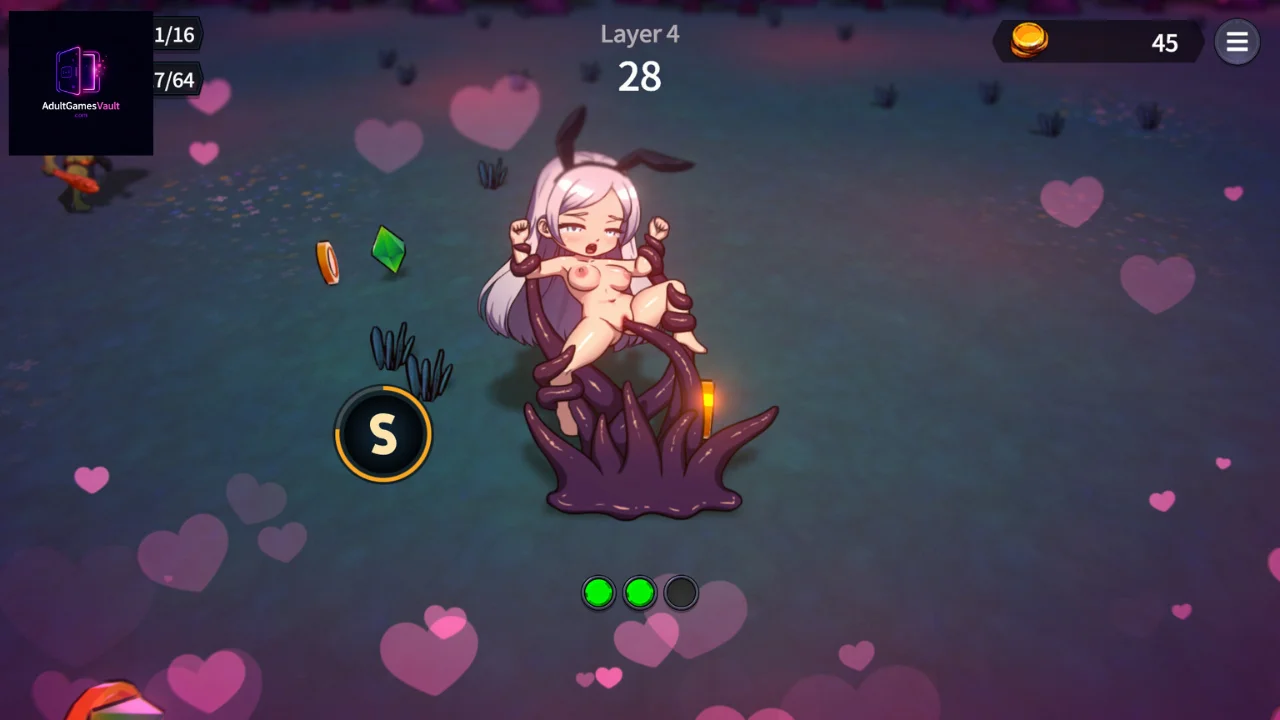
Another key element is the upgrade and progression system. During each run, players can acquire new skills, equipment, or enhancements that change how their character performs. Some upgrades are temporary for the current run, while others contribute to long-term progression across multiple attempts.
The game also emphasizes risk and reward mechanics. Exploring deeper into the dungeon offers better rewards but significantly increases difficulty. Players must decide whether to push forward for greater gains or retreat to preserve their progress.
Overall, Humiliation Dungeon Survivors delivers a gameplay experience centered on survival, adaptability, and incremental progression, where each run helps players learn, improve, and prepare for the next challenge.
Humiliation Dungeon Survivors Review and Community Feedback
After its release, Humiliation Dungeon Survivors attracted attention from players who enjoy roguelike dungeon games with repeatable gameplay loops. While the game is relatively niche, it has built a following among those who appreciate challenge-based progression and survival mechanics.
One of the most commonly mentioned strengths is the game’s roguelike structure. Players enjoy the idea that each run feels different, with new enemy patterns, item drops, and situations that require quick adaptation. This design keeps the gameplay fresh and encourages multiple playthroughs.
Another highlight is the risk-and-reward system. The deeper players explore into the dungeon, the greater the rewards—but also the danger. This creates constant tension and forces players to make strategic decisions about whether to continue or retreat.

The progression system is also appreciated, especially the balance between short-term upgrades within a run and long-term improvements across multiple runs. This gives players a sense of growth even after failure, which is a key element in roguelike games.
However, some players note that the gameplay can feel repetitive over long sessions, especially if they prefer more structured story content. Since the game focuses heavily on survival and replayability, it may not appeal to those looking for a narrative-driven experience.
Overall, community feedback generally describes Humiliation Dungeon Survivors as a solid roguelike dungeon experience, offering engaging survival gameplay, meaningful progression, and replay value for players who enjoy challenging, run-based systems.
System Requirements for Humiliation Dungeon Survivors
Before installing Humiliation Dungeon Survivors, it’s recommended to check whether your PC meets the necessary specifications. Since the game features 2D visuals and roguelike mechanics, it is relatively lightweight and can run on most systems without requiring high-end hardware.
Based on typical requirements for indie roguelike RPGs, the game is designed to perform smoothly on standard PCs.
| Component | Minimum Requirements | Recommended Requirements |
| Operating System | Windows 7 / 8 / 10 | Windows 10 |
| Processor | Intel Core 2 Duo or equivalent | Intel Core i3 or higher |
| Memory (RAM) | 2 GB RAM | 4 GB RAM |
| Graphics | Integrated graphics | Any modern GPU |
| DirectX | Version 9.0c | Version 11 |
| Storage | Around 1–2 GB available space | 2 GB available space |
Overall, Humiliation Dungeon Survivors is considered a low requirement roguelike RPG, meaning it should run smoothly on most laptops and entry-level PCs.
For the best experience, especially during longer sessions, it’s recommended to run the game on a stable system with updated drivers and minimal background applications.
Conclusion
Overall, Humiliation Dungeon Survivors offers a challenging roguelike dungeon experience focused on survival, adaptability, and continuous improvement. By combining run-based progression, dungeon exploration, and fast-paced combat, the game creates a gameplay loop that encourages players to learn from each attempt and push further with every run.
One of the game’s key strengths lies in its replayability. The randomized elements and progression systems ensure that no two runs feel exactly the same, keeping the experience engaging over time.
While it may not provide a deep narrative or large-scale world-building, the game excels at delivering a focused and gameplay-driven experience. Players who enjoy testing their skills, managing risks, and gradually mastering challenging systems will find it particularly rewarding.
For fans of roguelike dungeon RPGs, Humiliation Dungeon Survivors stands as a solid option that emphasizes gameplay depth, survival mechanics, and long-term progression.
If you’re interested in a more unconventional take on dungeon RPG gameplay, That Time I Got Reincarnated as a Demon Hand is a great follow-up—offering a unique perspective with its unusual protagonist, while still keeping the core elements of exploration, progression, and strategic combat.