
 Games
Games Game Series
 Guide
Guide
 简体中文
简体中文 हिन्दी
 한국어
한국어 Tiếng Việt
 ไทย
ไทยAlps and the Dangerous Forest is a side-scrolling puzzle-platformer that lean heavily into the survival horror subgenre. Developed by x-rabbit, the game gained a dedicated following within niche indie circles for its striking contrast between a charming anime aesthetic and an unforgiving, high-stakes environment. Unlike typical fantasy adventures where you’re a powerful warrior, this title places you in the shoes of a protagonist who is completely defenseless, turning every encounter into a tense game of cat and mouse.
The story follows Alps, a young girl lost in a woodland that feels alive with malice. Every step forward is a tactical decision, as the forest is packed with lethal traps and predatory creatures that can end her journey in an instant. The gameplay isn’t about combat; it’s about observation and timing. You’ll need to solve environmental puzzles and master the “trial and error” rhythm to survive. While the game’s difficulty can be punishing, it rewards players who enjoy the thrill of escaping a dangerous situation by the skin of their teeth.
If you’re interested in exploring a similarly unusual indie experience with a different kind of atmosphere, Pink Pulse is worth checking out—offering a more action-focused, sci-fi setting where survival depends on adapting to unpredictable threats and navigating a strange, hostile environment.
The Story of Alps and the Dangerous Forest
The narrative of Alps and the Dangerous Forest follows the harrowing journey of Alps, a young and seemingly ordinary girl who finds herself stranded in the heart of a vast, mysterious woodland. Unlike many protagonists in the genre who possess magical powers or combat skills, Alps is depicted as entirely vulnerable, with no means to fight back against the terrors that lurk within the shadows. Her only objective is to find a way out of this emerald prison and return to the safety of her home, but the path forward is blocked by an environment that feels increasingly sentient and Malicious.

As players guide Alps through the dense thickets, it becomes clear that the forest itself is the primary antagonist of the story. It is a place where the natural world has been twisted into a series of lethal gauntlets, ranging from hidden pitfall traps and crushing machinery to aggressive predators that view Alps as nothing more than prey. The story unfolds not through traditional dialogue or heavy exposition, but through the intense atmosphere and the desperate situations Alps must navigate. Each screen tells a silent story of a world that is as beautiful as it is deadly, emphasizing the stark contrast between the protagonist’s innocence and the brutal reality of her surroundings.
Throughout the campaign, the narrative weight is carried by the player’s ability to keep Alps alive against overwhelming odds. The forest is home to various creatures—from giant insects to shadowy monstrosities—each representing a different type of threat that forces Alps to use her wits and agility rather than brute force. The sense of isolation is palpable, and the stakes are constantly raised as the environments shift from sun-drenched clearings to dark, claustrophobic caverns. Ultimately, the story is a testament to human perseverance, focusing on the sheer will to survive in a landscape where every step could be the last, and where the mystery of the forest’s origin remains a haunting backdrop to Alps’ struggle for freedom.
Gameplay of Alps and the Dangerous Forest
The gameplay of Alps and the Dangerous Forest is built on a high-stakes foundation of 2D side-scrolling platforming and environmental puzzle-solving. Unlike traditional action games where you might fight your way through enemies, this title places you in control of a protagonist who is entirely defenseless. Because Alps cannot attack, the core experience revolves around stealth, observation, and precision. You must carefully study the patrol patterns of predators and the subtle visual cues of hidden traps, transforming every screen into a tactical challenge where your wits are your only weapon.
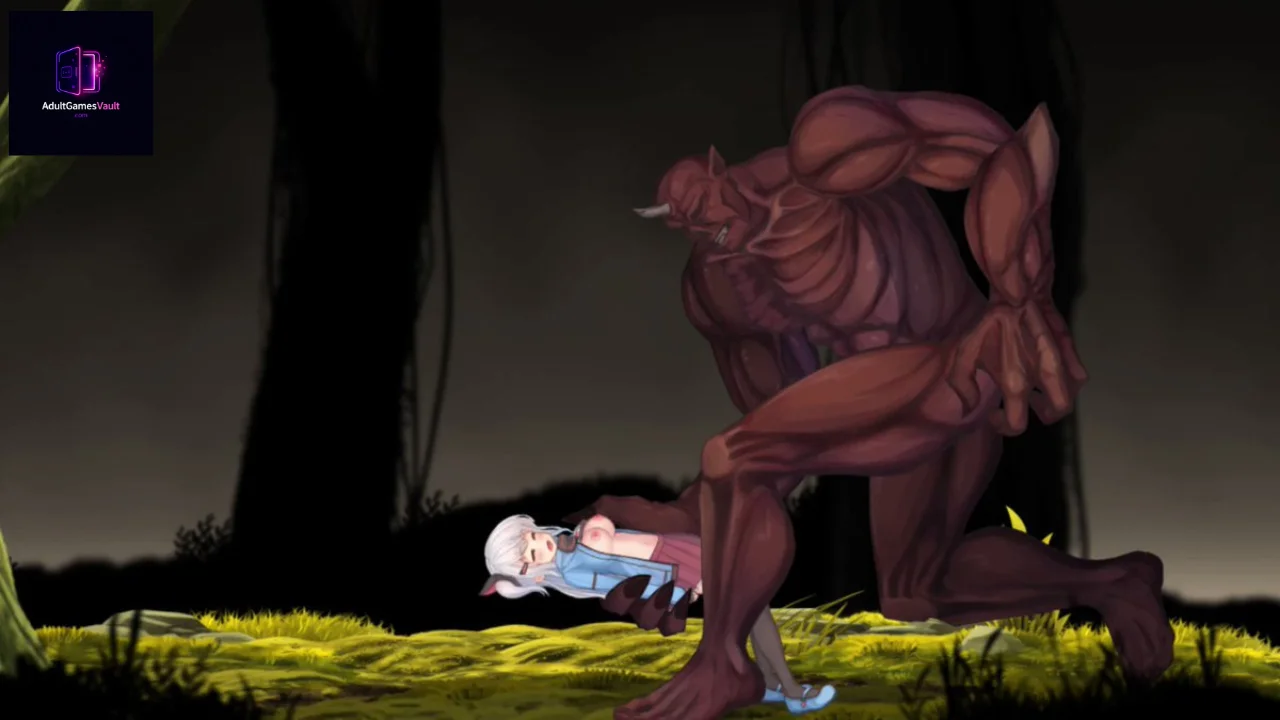
Interaction with the environment is essential for progression. You’ll find yourself pushing crates to reach high ledges, flipping switches to manipulate ancient machinery, and timing your movements to navigate collapsing terrain. The game is famous for its “trial and error” philosophy; the difficulty curve is steep, and a single misstep usually results in an immediate failure. However, the frustration is balanced by a generous checkpoint system that allows for instant restarts. This encourages you to treat every failure as a learning opportunity, slowly mastering the rhythm of each level until you find the perfect path to safety.
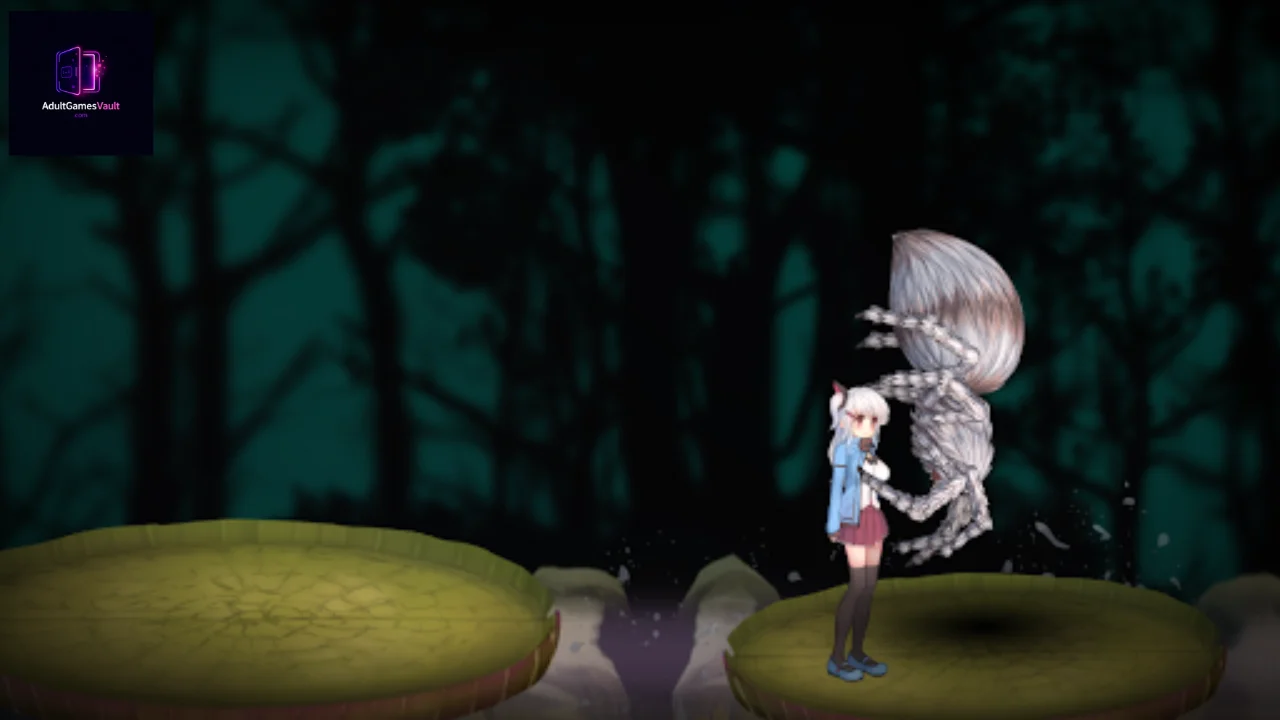
As you venture deeper into the woods, the hazards become increasingly complex, demanding both quick reflexes and strategic patience. Some segments require frame-perfect jumps to escape fast-moving hazards, while others require you to hide in the shadows and wait for the opportune moment to slip past a monster. The tense atmosphere is amplified by the game’s sound design and the constant threat of the unknown, making the gameplay feel like a desperate, narrow escape. Overall, the mechanics create a rewarding loop of challenge and discovery, providing a deep sense of satisfaction whenever you successfully guide Alps through a particularly lethal gauntlet.
Alps and the Dangerous Forest Review and Community Feedback
Since its release, Alps and the Dangerous Forest has maintained a steady reputation within the niche indie and dojin community as an “old but gold” title that perfectly captures the tension of survival horror. Many players frequently praise the game’s striking visual contrast, where the charming, soft anime art style of the protagonist, Alps, stands in stark opposition to the brutal and unforgiving nature of the forest. The community highlights the puzzle-platforming mechanics as one of the game’s strongest points, noting that while the controls are simple and responsive—even with gamepad support—the actual challenges require a high level of observation and tactical patience. Fans of the genre often describe the experience as a “thrilling game of cat and mouse,” where the lack of combat abilities makes every successful escape feel earned and deeply satisfying.

However, the game is also widely known for its steep “trial and error” difficulty curve, which has sparked significant discussion among players. Newcomers often find the first-look encounters to be punishing, as many traps and monster patterns are designed to be almost impossible to predict without failing at least once. Despite this, the community generally appreciates the player-friendly restart system, which places Alps back immediately before the point of failure and allows for skipping previously seen “Game Over” events to maintain a brisk gameplay tempo. While some critics point out that the campaign is relatively short, most players agree that the high replay value—driven by the desire to discover every hidden interaction and complete the gallery—makes it a standout experience for those who enjoy high-stakes, atmospheric survival games.
System Requirements for Alps and the Dangerous Forest
Since Alps and the Dangerous Forest is a 2D side-scrolling title with a focus on high-quality anime-style animations rather than complex 3D environments, it is remarkably lightweight and can run on almost any modern PC. The game is designed to be accessible, though its high-resolution sprites and fluid animation sequences mean that having a dedicated graphics card or sufficient system memory will ensure a much smoother experience, especially during the more intense platforming sections.
According to the technical specifications provided on its distribution pages like DLsite, the game is optimized for Windows-based systems. While it can run on older hardware, players using laptops with integrated graphics should ensure they have updated drivers to avoid any stuttering during gameplay.
| Component | Minimum Requirements | Recommended Requirements |
| Operating System | Windows 7 / 8 / 10 | Windows 10 |
| Processor | 2.0 GHz Dual Core or equivalent | Intel Core i3 or higher |
| Memory (RAM) | 2 GB RAM | 4 GB RAM |
| Graphics | DirectX 9.0c compatible | DirectX 11 with 2GB VRAM |
| Storage | Around 1 GB available space | 1 GB available space |
| Display | 1280 x 720 resolution | 1280 x 720 or higher |
Overall, it is a very low-requirement game. However, if you are using an older laptop with less than 2GB of VRAM (Video RAM), you might encounter some frame drops in areas with heavy environmental effects or large enemy sprites.
Conclusion
In conclusion, Alps and the Dangerous Forest is a standout title for fans of the survival-puzzle genre who appreciate a “high-stakes” gameplay loop. By stripping away complex combat mechanics and focusing entirely on stealth, timing, and environmental interaction, the game creates a pure sense of vulnerability that is rare in modern action games. Its biggest strength lies in its beautiful yet deadly world, where every screen feels like a carefully crafted puzzle designed to test the player’s patience and resolve.
While the “trial and error” nature of the game and its steep difficulty curve may be challenging for some, the quick restart system and the satisfaction of finally escaping a lethal trap make it a rewarding experience. Whether you are drawn to it by its striking anime art style or the thrill of a narrow escape, the journey of Alps is one that leaves a lasting impression. It is a compact, intense adventure that proves you don’t need a massive budget to create a deeply atmospheric and engaging survival story.