
 Games
Games Game Series
 Guide
Guide
 简体中文
简体中文 हिन्दी
 한국어
한국어 Tiếng Việt
 ไทย
ไทยLast Evil is a roguelike deck-building RPG that combines card-based combat, dungeon exploration, and survival mechanics. Inspired by games like Slay the Spire, it places players in a dark fantasy world where each run presents new challenges, enemies, and opportunities to build powerful card combinations.
Players progress through dangerous dungeons by collecting cards, relics, and upgrades that shape their strategy. Every decision—whether choosing a new card, upgrading abilities, or taking risks—can determine the outcome of a run.
With its mix of strategic deck-building, roguelike progression, and replayable gameplay loops, Last Evil offers a challenging experience for players who enjoy tactical planning and adapting to unpredictable situations.
You can buy this game here:
https://store.steampowered.com/app/823910/Last_Evil/
If you enjoy the roguelike progression and dungeon-based challenges in Last Evil, then Take Me to the Dungeon is a great follow-up—offering a more traditional RPG-style dungeon crawling experience with character progression, exploration, and a focus on navigating dangerous environments filled with enemies and hidden encounters. And if you’re looking for a darker, more oppressive atmosphere with a strong focus on climbing through increasingly punishing encounters, Lost Chapter is another excellent choice, delivering a more mysterious and intense deckbuilding experience.
The Story of Last Evil
Set in a dark fantasy world consumed by chaos, Last Evil follows the journey of a lone warrior navigating through dangerous lands filled with enemies, corruption, and hidden dangers. The world itself feels hostile and unforgiving, with every step forward bringing new threats.
Unlike traditional story-driven RPGs, Last Evil does not focus on a linear narrative. Instead, the story is presented in a more subtle way through events, encounters, and environmental progression. As players advance through different stages, they uncover fragments of the world’s lore and the challenges faced by those who came before.

The protagonist’s journey is less about a predefined plot and more about survival and progression through increasingly difficult trials. Each run represents another attempt to push deeper into the world, facing stronger enemies and discovering new possibilities.
Because of its roguelike structure, the narrative is shaped by the player’s experience. The sense of progression comes not only from unlocking new abilities and cards, but also from gradually understanding the world and mastering its challenges.
Overall, Last Evil presents a minimalist but atmospheric story, where the focus remains on gameplay while still maintaining a dark and immersive setting.
Last Evil Gameplay
The gameplay of Last Evil revolves around roguelike deck-building mechanics, where players progress through a series of stages using a customizable deck of cards. Each run is different, requiring players to adapt their strategy based on the cards, relics, and events they encounter.
At the core of the game is the card-based combat system. During battles, players draw cards from their deck to perform actions such as attacking, defending, or applying special effects. Managing resources and choosing the right cards at the right time is essential to survive tougher encounters.
Another important feature is the deck-building system. As players advance, they can collect new cards, remove weaker ones, and upgrade existing abilities. This allows for a wide variety of strategies, from aggressive attack-focused builds to more defensive or control-oriented playstyles.
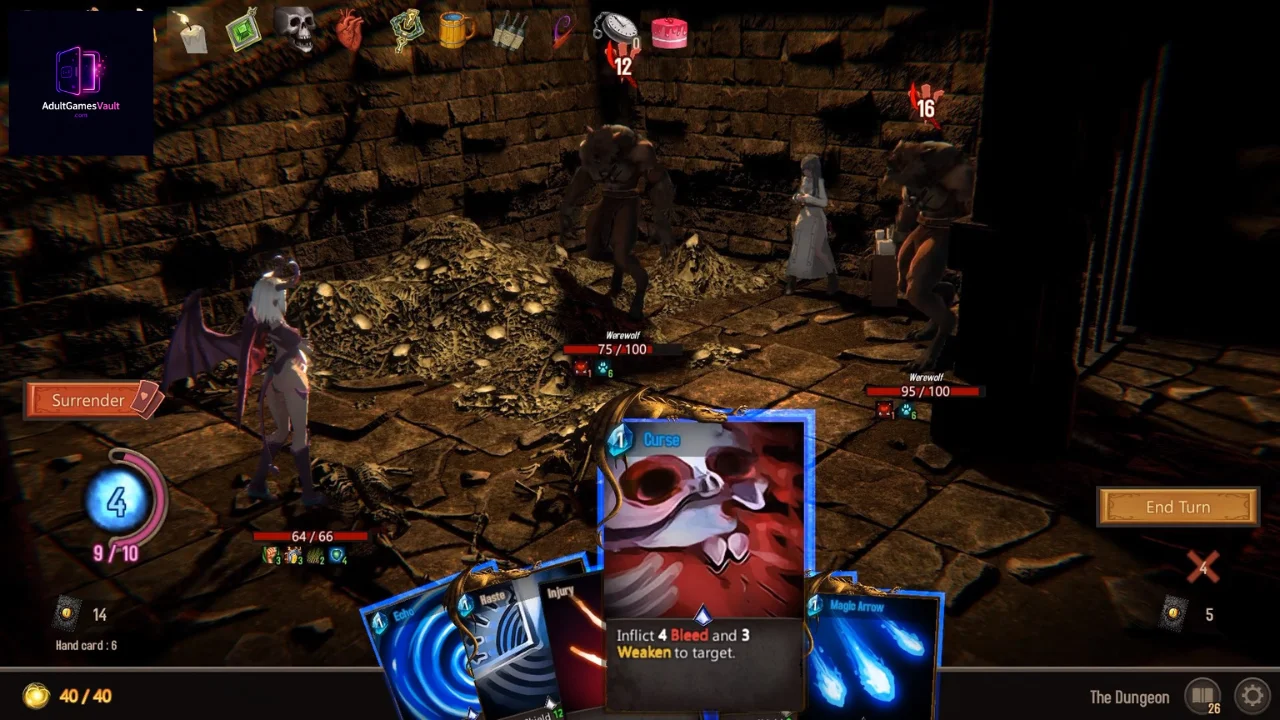
The game also includes a roguelike progression system, meaning that each run resets after defeat, but players can unlock new content, cards, or bonuses for future attempts. This creates a loop of continuous improvement, where knowledge and strategy carry over between runs.
In addition to combat, players encounter random events, shops, and branching paths. These elements introduce choices that can significantly impact the outcome of a run, adding a layer of risk and reward to exploration.
Overall, Last Evil offers a gameplay experience centered on strategic decision-making, deck optimization, and adapting to unpredictable situations, making each run both challenging and highly replayable.
Last Evil Review and Community Feedback
After its release, Last Evil gained attention among players who enjoy roguelike deck-building games, especially fans of titles like Slay the Spire. The game is often praised for successfully combining card strategy mechanics with replayable dungeon progression.
One of the most frequently highlighted strengths is the deck-building system. Players appreciate the variety of cards and the ability to create different strategies depending on how they build their deck. The flexibility in playstyles—ranging from aggressive damage builds to more defensive or control-based approaches—adds depth to the gameplay.
Another aspect commonly mentioned is the game’s roguelike structure, where each run feels different due to randomized events, card rewards, and enemy encounters. This keeps the experience fresh and encourages players to experiment with new strategies across multiple playthroughs.
The difficulty curve is also noted by the community. While the game starts relatively manageable, later stages become significantly more challenging, requiring careful planning and optimized deck combinations to progress further.
However, some players point out that the game can feel repetitive over time, especially if they prefer more story-driven experiences. Since the focus is primarily on gameplay mechanics, narrative depth is relatively limited.
Overall, community feedback generally describes Last Evil as a solid roguelike deck-building RPG, offering engaging strategic gameplay, strong replayability, and a satisfying progression system for players who enjoy card-based mechanics.
System Requirements for Last Evil
Before installing Last Evil, it’s important to check whether your PC meets the required specifications. Since the game features 2D visuals and card-based gameplay, it is relatively lightweight and can run smoothly on most systems.
Based on official store listings, the game does not require high-end hardware.
| Component | Minimum Requirements | Recommended Requirements |
| Operating System | Windows 7 / 8 / 10 | Windows 10 |
| Processor | Intel Core i3 or equivalent | Intel Core i5 or higher |
| Memory (RAM) | 2 GB RAM | 4 GB RAM |
| Graphics | Integrated graphics | Any modern GPU |
| DirectX | Version 9.0c | Version 11 |
| Storage | Around 2 GB available space | 2 GB available space |
Overall, Last Evil is considered a low requirement roguelike game, meaning it can run on most laptops and entry-level PCs without performance issues.
Because the game focuses on strategic mechanics rather than heavy graphics, players can expect stable performance even on older systems. For smoother gameplay during longer sessions, it is recommended to run the game with updated drivers and minimal background applications.
Conclusion
Overall, Last Evil offers a compelling mix of roguelike progression and deck-building strategy, delivering a gameplay experience that rewards careful planning and adaptability. By combining card-based combat, randomized runs, and strategic decision-making, the game creates a loop that keeps players engaged over multiple playthroughs.
One of its strongest features is the flexibility in deck building, allowing players to experiment with different strategies and discover powerful combinations. This, along with the unpredictable nature of each run, ensures that no two playthroughs feel exactly the same.
While the game places less emphasis on storytelling, it excels at providing a gameplay-focused experience that challenges players to refine their tactics and improve with each attempt.
For fans of roguelike card games and strategy-driven gameplay, Last Evil stands out as a solid and replayable title that delivers both challenge and variety.